Cuándo tomar cúrcuma: la guía completa para aprovechar todos sus beneficios

💡Key takeaways
Best time: Morning, noon or evening depending on your habits. What matters most is daily consistency.
With a meal: Always take it with fats (olive oil, avocado, nuts) to optimise absorption.
Dosage: 1 capsule per day with a large glass of water during a meal.
Duration of the course: At least 2 to 3 months, then a 2 to 4 week break before starting again.
Contents
You’ve chosen your turmeric supplement, and now you’re asking a perfectly reasonable question: what is the best time to take it? With all the different recommendations you read here and there, it can sometimes be hard to figure it out.
The good news is, it’s simpler than it seems. Whether you want to support joint comfort, digestion, or simply look after your overall wellbeing, a few clear markers are enough to guide you on when to take turmeric. Follow the guide, we’ll explain everything. 😊
Curcumin and bioavailability: why timing matters
Before answering the question of timing, let’s take a moment to understand what’s happening in your body. Turmeric contains curcuminoids, the main one being curcumin. This is the compound that carries most of the beneficial properties of this golden root.
The challenge? Curcumin has naturally limited bioavailability. In other words, it has difficulty crossing the intestinal wall and your body eliminates it fairly quickly. This is precisely why the timing of intake and food combinations play an important role in its absorption.
Fortunately, several strategies can help optimise its absorption:
- combining it with a source of fats;
- choosing patented formulas like Meriva®, designed to improve absorption;
- maintaining a consistent intake to ensure a steady level in your body.
Understanding these mechanisms will help you get the most from your course. 💛
When to take turmeric in the morning or evening: what is really the best time?
Why the morning works well
Morning has some practical advantages. It’s often breakfast time, which makes it easier to combine with a meal containing fats. Plus, adding it to your morning routine helps you turn it into a natural daily habit.
If your breakfast already includes yoghurt, avocado on toast or a drizzle of olive oil, that’s perfect: you’re creating the conditions for optimal absorption. One Novoma turmeric capsule together with these foods is a great way to start your day.
The benefits of taking it in the evening
Evening also has interesting benefits. During the night, your body is hard at work: it repairs, regenerates, and recovers from the day. This makes it a good time to provide nutritional support.
Some people also enjoy evening rituals. Preparing a “golden milk” — turmeric mixed with warm plant-based milk and a pinch of pepper — can become a soothing moment to end the day. 🌙
What really matters: consistency
As you’ve probably gathered, there is no single universal “ideal” time to take turmeric. What truly matters is consistency and taking it with a meal. Whether you choose the morning, lunchtime, or evening, the key is to maintain a stable daily routine so your body benefits from a constant supply of curcumin.
The important thing is to choose the time slot that naturally fits into your daily life — the one you can stick to over the long term without effort.
Our recommendation: 1 Novoma turmeric capsule per day, during or at the end of a meal containing fats, at the time that suits you best.

With or without meals: which should you choose?
Why you should favour taking it with meals
Timing relative to meals is really important for turmeric’s effectiveness. Since curcumin is fat-soluble, it needs fats to be properly absorbed by the body.
Taking your capsule on an empty stomach significantly reduces absorption and may even cause digestive discomfort in people with sensitive stomachs.
We strongly recommend taking your turmeric during or just after a meal. This is especially relevant if the meal includes:
- olive oil or coconut oil;
- avocado;
- nuts, almonds or seeds;
- salmon, mackerel or sardines;
- eggs.
These sources of lipids create ideal conditions for your body to efficiently absorb curcumin. 🥑
Why you should avoid taking it on an empty stomach
Taking turmeric on an empty stomach is generally not recommended, even though some sources might suggest it. Without fats, curcumin absorption is significantly reduced. Plus, this practice may cause digestive discomfort for sensitive individuals.
At Novoma, we favour an approach that respects your body. That’s why we systematically recommend taking turmeric at mealtimes.
Turmeric and black pepper: is it really essential?
The role of piperine in absorption
You’ve probably heard about the classic pairing of turmeric and black pepper. Piperine, the active compound in pepper, is known to improve curcumin absorption by altering intestinal permeability. Some studies have even reported impressive results.
This synergy explains why many supplements include black pepper in their formulation. At Novoma, we made a different choice: we combined turmeric with ginger. Ginger also brings complementary benefits, particularly for joint comfort and morning mobility.
The limitations of piperine you should know about
However, the turmeric–piperine combo has some limitations you should be aware of. Piperine increases intestinal permeability in a non-selective way, which means it can also facilitate the passage of other unwanted substances into the bloodstream. It may also interact with certain medications by altering their metabolism.
People with digestive sensitivity or gastric discomfort should be particularly cautious with piperine. Dosage is also crucial: too much black pepper can cause more drawbacks than benefits.
Alternatives to optimise absorption
Fortunately, piperine is not the only way to improve turmeric’s bioavailability. Patented formulas like Meriva® use advanced encapsulation technologies that naturally optimise curcumin absorption without the need for high doses of piperine.
Combining turmeric with fats remains the safest, gentlest and most natural way to support its absorption. That’s why we insist on the importance of taking your supplement with a meal. 🍽️
We recommend

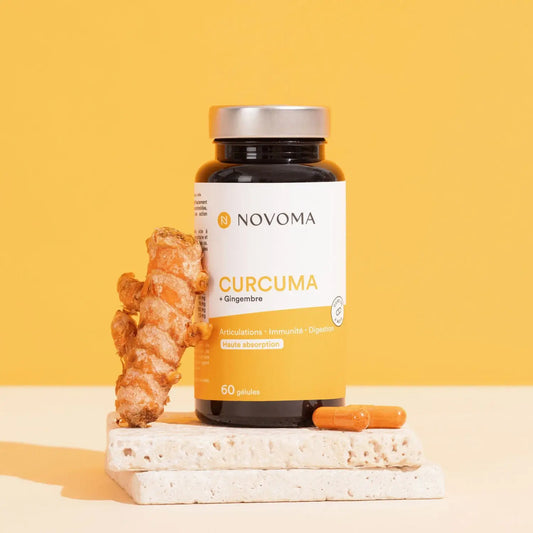
Turmeric
Meriva® patented turmeric extract, highly bioavailable and concentrated in curcumin
- ✅ Meriva®: the most absorbable form of curcumin
- ✅ High curcumin content
- ✅ Formula with ginger
- ✅ 2-month course
Dosage and duration of the course: key recommendations
Recommended dosages
The recommended dose of turmeric varies depending on the formulation and individual needs. Quality supplements generally contain between 150 and 500 mg of curcumin per capsule.
At Novoma, we recommend 1 capsule per day with a large glass of water, preferably during or at the end of a meal containing fats. This dosage has been designed to be effective while respecting wellbeing recommendations.
How long for an effective course?
The recommended length of a turmeric course is at least 2 to 3 months. The time before you feel the first benefits can vary from person to person and depends on your goals:
- for digestive comfort, benefits are usually felt after a few days;
- for joint wellbeing, it often takes 4 to 12 weeks to see significant improvements;
- for general antioxidant effects, long-term consistency is key.
Turmeric can be taken all year round. We do however recommend taking a 2 to 4 week break between courses before starting a new one if you wish.
Daily intake: a major asset
Yes, it is absolutely recommended to take turmeric daily as part of a course. Consistency is actually the key factor in its effectiveness. Taking your capsule every day, at the same time, with the same meal, helps you build a beneficial routine and maintain a stable level of curcumin in your body.
Just be sure to follow the dosage indicated on your supplement. ✨
The benefits of turmeric according to your needs
Turmeric and joint comfort
Turmeric is particularly well known for its benefits on joint mobility. It helps maintain joint flexibility and, when combined with ginger, helps reduce morning stiffness. It also contributes to bone health.
To maximise these benefits, regular daily intake is really important, regardless of the time of day you choose. The main thing is to maintain a steady supply to sustainably support your joint comfort.
If you want more comprehensive support, discover our Joint Formula which combines turmeric, glucosamine and chondroitin.
Turmeric and digestion
Turmeric naturally supports digestion. Taking your supplement with your main meals (lunch or dinner) allows you to benefit directly from this positive effect on the digestive system.
This is particularly useful if you’re looking for support after meals or if you want to promote digestive comfort on a daily basis. 🌿
Turmeric and overall wellbeing
Beyond targeted benefits, turmeric helps maintain an overall state of wellbeing thanks to its antioxidant properties. It helps protect your cells from oxidative stress, supports the effectiveness of your immune system and even contributes to keeping your skin in good condition.
To enjoy these broad benefits, the time of intake matters less: what counts is maintaining daily consistency.
To learn more about all its benefits, check out our full article on turmeric.
Our practical tips to boost your course
The best combinations on your plate
To get the most out of your turmeric, make sure to pair it with foods rich in healthy fats. Here are a few easy ideas to include:
- a breakfast of mashed avocado on wholegrain bread, an egg and your capsule;
- a generous salad with salmon, a handful of nuts and a nice drizzle of olive oil;
- vegetables sautéed in coconut oil (sweet potato, broccoli, carrots…);
- a dinner of fatty fish and seasonal vegetables roasted in the oven.
See? Nothing complicated. These combinations create the perfect environment for curcumin absorption while giving you plenty of other good nutrients at the same time.
Complementary lifestyle habits
To maximise the benefits of your turmeric course, it’s also a good idea to adopt healthy daily habits:
- do regular physical activity suited to your pace: walking, yoga, swimming… every bit counts;
- favour a diet rich in omega-3s (fatty fish, nuts, rapeseed oil) to support joint wellbeing;
- make sure you stay well hydrated throughout the day;
- prioritise quality sleep to support your body’s recovery.
These simple habits, combined with your turmeric course, create a holistic approach that’s great for your overall wellbeing. Turmeric is one of those natural supports that are especially interesting. 💪
The importance of listening to your body
Because everyone is unique, it’s important to observe how you feel during your course. Note your observations over the weeks to assess the effects of turmeric on your wellbeing. Don’t hesitate to adjust the time of intake according to your personal preferences, as long as you always take it with a meal.
If you have any questions or would like personalised guidance, the Novoma team is on hand to advise you.

Precautions and contraindications to know
Situations requiring particular vigilance
Although turmeric is generally well tolerated, some situations require extra caution. Pregnant or breastfeeding women should seek advice from a wellbeing professional before starting a course. Similarly, if you are taking anticoagulant treatments, medical advice is recommended, as turmeric can interact with these medications.
People with gallstones or bile duct obstruction should also consult a wellbeing professional before taking turmeric.
Possible side effects
At the recommended doses, turmeric is generally very well tolerated. However, some people may experience mild digestive discomfort at the beginning of the course, such as bloating or a feeling of heaviness. These issues are usually temporary and tend to disappear after a few days of adjustment.
If you experience persistent discomfort, don’t hesitate to reduce the dose or consult a wellbeing professional. It’s also important to strictly follow the recommended doses, as excessive intake may cause more pronounced inconveniences.
The importance of quality and traceability
To enjoy your course with complete peace of mind, it’s essential to choose high-quality, traceable and controlled turmeric. Novoma supplements are made in France according to strict quality and safety standards. Our Meriva® turmeric combines effectiveness and respect for your body thanks to a patented formula and rigorous testing.
The purity and traceability of ingredients are key guarantees for an effective and safe course. 🌟
Summary table: everything you need to remember
Time of intake |
Benefits |
Recommendations |
Morning |
Easily fits into your routine |
Take with a fatty meal (avocado, eggs, yoghurt) |
Noon |
Optimal digestion |
Combine with a dish containing olive oil or fish |
Evening |
Night-time recovery period |
Take with dinner or a drink like golden milk |
Consistency |
Maintains a steady level |
Choose the same time every day |
Dosage |
1 capsule per day |
With a large glass of water |
Duration of course |
At least 2 to 3 months |
2 to 4 week break between courses |
To remember: the key points
Time of intake: Morning, noon or evening — the important thing is to maintain daily consistency. Choose the time that naturally fits into your personal routine to ensure you take it regularly.
The importance of meals: Always take your turmeric during or just after a meal containing fats. This combination is crucial to optimise curcumin absorption.
Quality first: Choose patented formulas like Novoma’s Meriva®, which guarantee optimal bioavailability without requiring high doses of piperine.
Consistency is key: A course of at least 2 to 3 months with regular daily intake will allow you to see the benefits of turmeric on your joint, digestive and overall wellbeing.
Personalised support: Don’t hesitate to ask the Novoma team for advice tailored to your needs. Our customer service and wellbeing professionals are here for you. 💛