PCOS and Dietary Supplements: Which Nutrients Can Help Naturally?

Summary
PCOS affects 1 in 10 women. And yet, it remains largely unknown, trivialized, and poorly explained. Women are told that their periods will eventually return, that acne is “normal,” that they are probably eating too much… and that there is nothing to be done as long as they don’t want children. They are led to believe that there is no solution, no dietary supplement for PCOS.
PCOS isn't just a "minor disorder" or a baby project on hold. It deserves to be understood, heard, and supported.
And yes, there are ways to take action. Not to make it disappear, but to live better with it, soothe the signs, and regain balance.
In this article, we present the most useful food supplements to naturally support PCOS, as well as lifestyle advice that can make all the difference.
What is PCOS?
SO… what? PCOS is the acronym for polycystic ovary syndrome , formerly called Stein-Leventhal syndrome.
Concretely, it is a hormonal imbalance that disrupts the functioning of the ovaries. The latter struggle to release an egg each cycle: ovulation occurs poorly or not at all. The follicles (small pockets that contain the eggs) therefore accumulate in the ovaries without reaching maturity. This is what is called “multifollicular” ovaries and this is where the name PCOS comes from.
Important: PCOS is not a “disease” in the strict sense of the term. A disease generally has a single cause and a well-defined treatment. A syndrome, on the other hand, groups together several symptoms that can vary from one woman to another, without a specific origin or universal solution. This is exactly the case here.
PCOS is therefore a functional and multifactorial syndrome, which can appear as early as adolescence. We know that several factors can contribute to its appearance:
-
A genetic predisposition,
-
Insulin resistance,
-
An imbalance of the hormonal axis (ovaries, pituitary gland, adrenal glands),
-
And sometimes chronic low-grade inflammation.
It is the most common female hormonal disorder of reproductive age and the leading cause of infertility in France, according to INSERM.
However, it is still too little diagnosed or recognized and many women remain in a state of incomprehension for years, or even in a real medical wandering.😔

How to recognize PCOS?
This syndrome doesn't manifest itself in the same way in all women. And for good reason: there isn't just one PCOS, but several profiles, depending on the dominant mechanisms. In some, it's the ovaries that are the problem (with irregular ovulation), in others, it's insulin resistance, an overstimulated adrenal gland that profoundly disrupts hormonal balance.
What are the most common signs of PCOS?
There are several signs that can point to PCOS. Here are the most commonly reported ones:
-
Irregular, spaced out or completely absent cycles,
-
More pronounced hair growth, particularly on the chin, stomach or thighs,
-
Stubborn hormonal acne that persists into adulthood,
-
Difficulty losing weight, sometimes despite a balanced lifestyle,
-
Chronic fatigue, fluctuating morale, even real mental fog.
These signs are not systematic, but if they speak to you, they deserve to be taken seriously.
How is PCOS diagnosed?
The diagnosis of PCOS is made with a gynecologist or an endocrinologist, and it takes place in two complementary stages:
1️⃣ First step: pelvic ultrasound, which allows us to identify possible multifollicular ovaries (and not “cysts” as the name suggests), in other words an abnormal accumulation of small follicles that do not reach maturity.
2️⃣ Second step: blood hormone test, to assess in particular the levels of androgens (testosterone, DHEA, etc.), FSH, LH, prolactin and sometimes AMH (anti-Müllerian hormone).
Diagnosis is based on the so-called Rotterdam criteria , which are used as a reference. For PCOS to be suspected, at least two of these three criteria must be met:
-
Irregular or absent cycles, a sign of a lack of ovulation,
-
Hyperandrogenism, visible (acne, hairiness, hair loss) or detected in blood tests,
-
Multifollicular ovaries visible on ultrasound, or high AMH levels.
But that's not all. Before making a diagnosis, it is essential to rule out other possible causes: this is called a diagnosis of elimination, and it is an integral part of the process. It helps ensure that it is not, for example, a thyroid disorder, a prolactin-producing pituitary adenoma, or Cushing's syndrome.
“What if I take the pill?” It's still possible, but the diagnosis can be more complex because some markers are distorted. In this case, don't hesitate to seek medical advice.
What dietary supplements can help with PCOS?
Let’s not lie to ourselves: no dietary supplement can “cure” PCOS.
But certain active ingredients can really help to reduce the effects on a daily basis.
The goal is to act where PCOS is most felt:
✅ Lower androgens to limit imperfections, hairiness or hair loss;
✅ Support ovulation and regularity of cycles;
✅ Improve insulin sensitivity to better manage weight and cravings;
✅ Calm internal imbalances, soothe the mind, boost energy.
Provided, of course, that you choose the right active ingredients and combine them with a lifestyle that's tailored to your needs. Here, we present the best dietary supplements for PCOS.
Vitamin B9 or Folic Acid
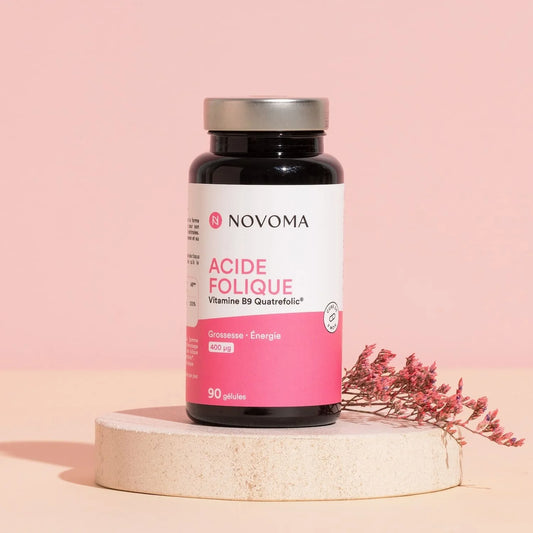
Vitamin B9 (also called folic acid) is much more than a “pregnancy vitamin” and, in the context of PCOS, it is even essential.
Why? Because it contributes to the metabolism of homocysteine, an amino acid whose levels can be unbalanced in PCOS, linked to insulin resistance or chronic internal imbalance. However, excess homocysteine can affect ovulation, vascularization, and even the quality of reproductive cells.
A randomized, double-blind study has also shown that folic acid supplementation (5 mg per day) could improve certain metabolic markers in women with PCOS.
Folic Acid also helps reduce fatigue, which many women with PCOS experience.
➡️ Please note: Not all vitamin B9 is created equal. Quatrefolic® (5-MTHF) is the most bioavailable form of Vitamin B9: this means that the body can use it directly, without needing to transform it. This is the form you will find in our supplement. ☺️
Zinc
If there were a top 3 supplements for PCOS, zinc would definitely be there. It acts on three key areas of PCOS:
➡️ The skin, often prone to imperfections,
➡️ Androgens, in order to limit hair growth and hair loss,
➡️ Sugar metabolism, often disrupted by insulin resistance.
Concretely, zinc contributes to maintaining a normal testosterone level, a central point when we want to soothe the effects of hyperandrogenism.
It also contributes to normal carbohydrate metabolism, which may support better blood sugar management and more stable hormonal balance.
And of course, zinc contributes to the maintenance of normal skin and, unsurprisingly, it is often the one we turn to in cases of imperfections, whether digestive or hormonal.
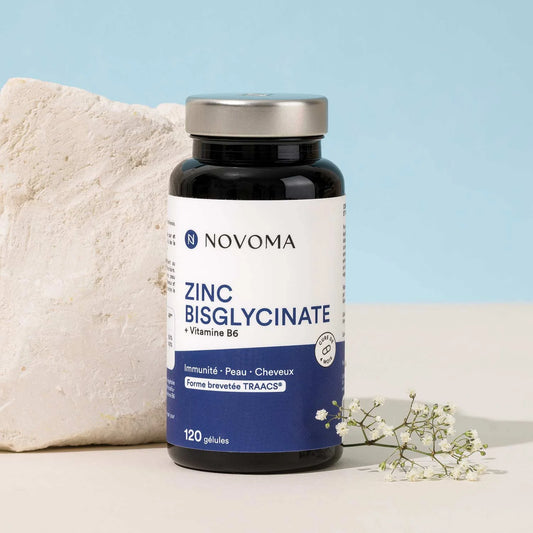
“Which form of zinc should we choose?” Zinc bisglycinate, of course! 🫠
It is a highly bioavailable form, well tolerated on the digestive level, and perfectly assimilated by the body. Ideal for effective action without digestive discomfort.
Chrome
In many women with PCOS, sugar is poorly utilized by cells: this is called insulin resistance. The body produces this hormone (insulin), but the cells become less receptive. As a result, glucose stagnates in the blood, insulin rises... and the ovaries begin to produce more androgens (male hormones). This hormonal imbalance can disrupt cycles, promote weight gain, food cravings, or persistent fatigue.
This resistance can be measured by the HOMA test (fasting blood sugar + insulin), but even without an “abnormal” result, signs may already be there.
In this context, chromium is a valuable ally: it contributes to maintaining normal blood sugar levels, which helps limit insulin spikes and the sugar cravings that follow. In short: more stable energy, fewer cravings... and a real boost to stabilize your weight.
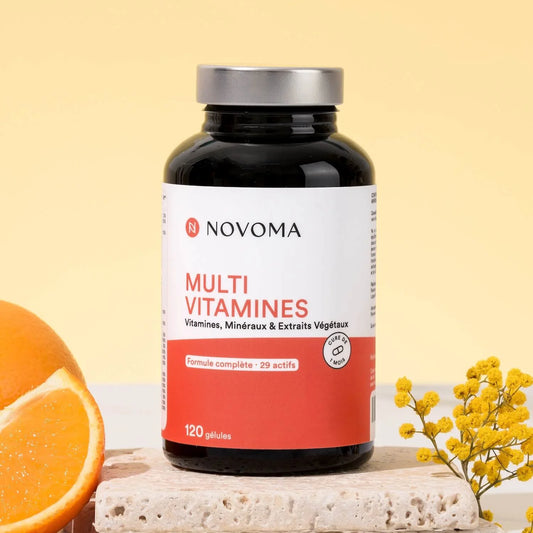
For our part, we have chosen to integrate chromium into our Multivitamins , alongside many other essential nutrients, vitamins and minerals including the precious Inositol.
➡️ Please note: Chromium is not recommended without medical advice if you are currently taking treatment that has an effect on blood sugar.
Inositol
Since we're talking about inositol: let us introduce you to the star active ingredient in food supplements dedicated to PCOS.
Sometimes nicknamed "vitamin B7", Inositol is not a vitamin in the strict sense, but a sugar naturally present in the body, structurally close to the B vitamins.
Its interest in the context of PCOS is widely documented, notably through systematic reviews, that is to say rigorous analyses of several scientific studies on the same subject. 🔎
This work highlights its potential to improve insulin sensitivity, support hormonal balance and promote more regular cycles.
It is therefore quite natural that we find Inositol in our Multivitamins, in synergy with the other allies of PCOS: Chromium, Zinc and Vitamin B9.
We recommend you

Multivitamins
Complete formula with the optimal dosage of 29 nutrients (vitamins, minerals and plant extracts).
- ✅ All-in-one complex
- ✅ Assimilable or natural forms
- ✅ Made in France
- ✅ 1 month treatment
Magnesium Bisglycinate
With PCOS, the hormonal imbalance doesn't stop at the ovaries. It also weighs on morale. Irritability, nervous fatigue, sleep disturbances... Stress becomes chronic, fueled by visible signs (acne, hair growth, weight gain) but also by hyperandrogenism itself.
A study has also highlighted the link between a high level of free androgens and a marked deterioration in the psychological quality of life in women with PCOS.
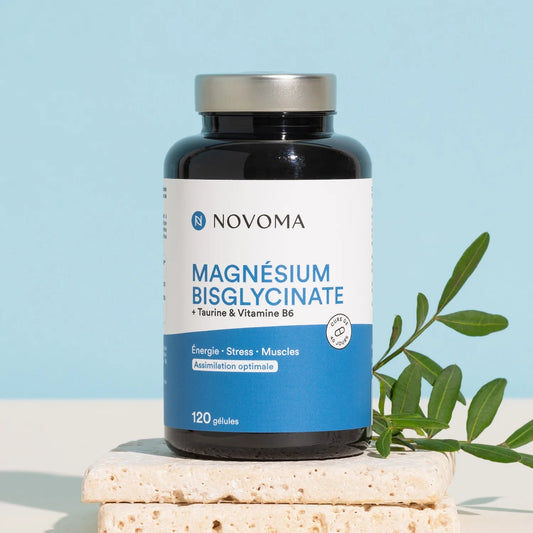
In this context, magnesium can help the most. Especially in the form of bisglycinate , which is well tolerated and easily assimilated. It contributes to reducing fatigue, normal functioning of the nervous system and normal psychological functions.
Especially since another study , conducted on 1,000 women with PCOS, found that low serum magnesium levels were associated with greater insulin resistance and higher testosterone levels.
➡️ Note: when you have PCOS, the ideal duration of a magnesium treatment is 2 to 3 months, the time to act in depth on stress and hormonal balance.
Omega-3
The package of this syndrome also includes: low-grade discomfort, mental fatigue, loss of concentration... These are heavy effects that can be alleviated by a good daily intake of essential fatty acids.
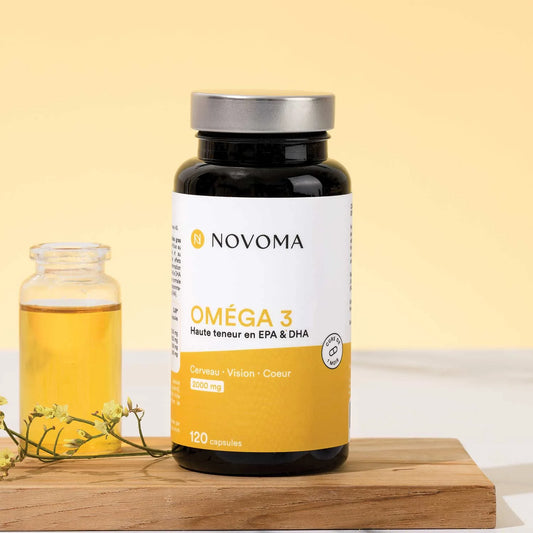
Omega-3 can therefore be added to the list of dietary supplements for PCOS, and more specifically EPA and DHA which contribute to normal brain function.
A scientific review also highlighted their potential role in preventing and improving insulin resistance, which is very common in women with PCOS. Researchers emphasize that an intake of at least 1 g/day of EPA + DHA would be necessary to observe a beneficial effect.
📚 To go further, discover our article on the foods richest in Omega-3 .
Advice from a naturopath specializing in PCOS
I'm Éloïse Dubois-Gaché, a naturopath specializing in herbal medicine and female hormonal balance. I work with women affected by PCOS every day, and today I'd like to share with you some practical advice that I regularly give during consultations:
✅ Adopt a low glycemic index diet : it helps to better stabilize blood sugar and improve insulin sensitivity, a key point in PCOS. I recommend that you prioritize fiber, increase your protein intake, and combine good fats (avocado, nuts, olive or rapeseed oil) with carbohydrates to reduce their glycemic impact. Without resorting to restriction, it is important to limit fast sugars.
✅ Move regularly, without pressure : Physical activity is a valuable ally for regulating hormones, reducing discomfort, and promoting better overall balance. My advice: choose an activity you enjoy. Brisk walking, yoga, dancing, swimming, gentle strength training... anything counts, as long as it makes you feel good.
✅ Learn to manage your stress : This is a fundamental point. Chronic stress stimulates the production of cortisol, which can worsen insulin resistance and further disrupt hormones. Incorporating breathing exercises, pauses, or even adaptogenic herbs like Ashwagandha can soothe the nervous system. And when the nervous system calms down… the hormones follow.
✅ Check your vitamin D levels : Too often overlooked, vitamin D is essential, particularly in the process of cell division. In cases of PCOS, it is particularly useful. Some studies have shown that supplementation can improve menstrual cycles, support folliculogenesis, and help reduce testosterone levels.
✅ Limit endocrine disruptors : They are everywhere in our daily lives – cosmetics, plastics, household products… and they insidiously harm our hormonal balance. To take action on a daily basis, here is what I recommend:
-
Choose raw and organic foods to avoid pesticide residues.
-
Switch to simple, natural household products like white vinegar, black soap, or bicarbonate of soda.
-
Replace damaged non-stick pans and limit plastics in the kitchen.
-
In the bathroom, pay attention to the ingredients in your cosmetics. A quick look at apps like Yuka or INCI Beauty will help you make the right choices.
✅ And above all, get support : PCOS is multifactorial, and every woman experiences it differently. Follow-up with your gynecologist or endocrinologist is essential. And if you want to combine it with a natural approach, naturopathy is an excellent ally. It allows you to adjust your lifestyle and effectively support the use of supplements, which can make a real difference in managing PCOS.

To summarize
Okay. A little summary is in order, don't you think?
PCOS is complex, confusing, often exhausting... but no, you are not condemned to suffer it and yes, food supplements for PCOS do exist.
Among the best allies: Zinc inc Bisglycinate, Vitamin B9, Omega-3, Inositol, Chromium, Vitamin D. All of this, of course, should be combined with an adapted lifestyle to support your hormonal balance and alleviate the discomfort of PCOS on a daily basis.
Long ignored, this syndrome is finally starting to make some noise. Like endometriosis, it deserves to be heard, recognized, and supported. This is just the beginning! 💪🏼