
-
 Best seller
 -

-


Marine Collagen
- Supports skin hydration and firmness
- Supports the health of hair and nails
🎁 Right now
Your Magnesium Bisglycinate 60 capsules (€14.90 value) free with purchases over €120.
- ✔️ 10% off every order
- ✔️ No commitment
- ✔️ 100% flexible: change with one click

Couldn't load pickup availability


Available in pharmacies, validated by healthcare professionals
Introducing Marine Collagen
Over time, skin naturally changes, and hair and nails can lose their luster. Our Marine Collagen was developed to support your beauty routine with a comprehensive formula combining 7 carefully selected active ingredients.
It provides 1000 mg of hydrolyzed Naticol® Marine Collagen peptides of types I and III, recognized for their high bioavailability and sourced from sustainable species. Collagen is the most abundant protein in the body and a major component of the skin.
Because beauty is not limited to the skin, our formula also combines recognized active ingredients such as hyaluronic acid, vitamin C, vitamin E, zinc bisglycinate, biotin, and vitamin B6, for a comprehensive approach to skin, hair, and nail beauty.
Thanks to this combination of complementary ingredients, our formula naturally integrates into your daily routine to reveal the natural radiance of your skin, hair, and nails.
Who is Marine Collagen for?
Marine Collagen is designed for anyone noticing the first signs of aging on their skin, hair, or nails and looking for a simple inner beauty solution. It is particularly suitable if:
- You notice your skin has changed
You find that it looks less supple or shows fine lines more easily than before. Natural collagen production declines from age 25, and the face is often where this first becomes visible. - Your hair or nails feel more fragile
Thinner hair, brittle nails, or nails that split easily… Our formula combines marine collagen with biotin and zinc, which contribute to the maintenance of normal hair, nails, and skin. - You want to take a preventive approach
Many people choose to add collagen to their beauty routine as early as 25–30, before the initial signs of aging become more noticeable. - You prefer simple routines
Three capsules a day are all it takes to benefit from a comprehensive formula uniting 7 complementary active ingredients, without adding multiple products to your daily routine.
Directions for use
Directions: take 3 capsules daily with a large glass of water. If you prefer, the capsules can also be opened and their contents mixed into yogurt, applesauce, or another cold preparation.
When to take: you can take your 3 capsules at any time of day, depending on your preference. Consistency matters more than the specific time.
Course duration: we recommend a 3-month course to support the skin's natural renewal process and fully experience the benefits of the supplement. If needed, the course can be repeated throughout the year.
Format: each bottle contains 90 capsules, providing a 1-month supply.
Our tip: consider subscribing to automatically renew your supply and enjoy 10% off every order.
Ingredients
Precautions for use
Scientific references
Several studies have been conducted on Naticol®, the hydrolyzed marine collagen used in our formula. These findings pertain to the Naticol® ingredient tested under specific conditions, including defined protocols, dosages, and target populations unique to each study.
1. Duteil L., Queille-Roussel C., Maubert Y., Esdaile J., Bruno-Bonnet C., Lacour J.-P. (2016). Specific natural bioactive type 1 collagen peptides oral intake reverse skin aging signs in mature women. Journal of Aging Research and Lifestyle, 5(2), 84-92. Read the study
A randomized, double-blind, placebo-controlled clinical trial conducted at the Centre de Pharmacologie Clinique Appliquée à la Dermatologie (CPCAD, Nice, France) in 60 women aged 46 to 69. Daily supplementation with 5 g/day of Naticol® marine collagen peptides for 8 weeks improved skin biomechanics, hydration, and reduced the appearance of crow's feet wrinkles.
2. Duteil L., Roussel C.Q., Bruno-Bonnet C., Lacour J.-P. (2018). Effect of Low Dose Type I Fish Collagen Peptides Combined or not with Silicon on Skin Aging Signs in Mature Women. Juniper Online Journal of Case Studies, 6(4), 555692. Read the study
A randomized, double-blind, placebo-controlled clinical trial conducted in 57 mature women. Daily supplementation with 2.5 g/day of Naticol® marine collagen peptides for 12 weeks improved skin firmness, hydration, and wrinkle appearance.
3. Commission Regulation (EU) No 432/2012 of 16 May 2012 establishing a list of permitted health claims made on foods. Applied health claims: vitamin C contributes to normal collagen formation for the normal function of skin; zinc contributes to the maintenance of normal skin, nails, and hair; biotin contributes to the maintenance of normal hair and skin; vitamin B6 contributes to normal protein metabolism; vitamins C and E contribute to the protection of cells from oxidative stress. Consult the official text
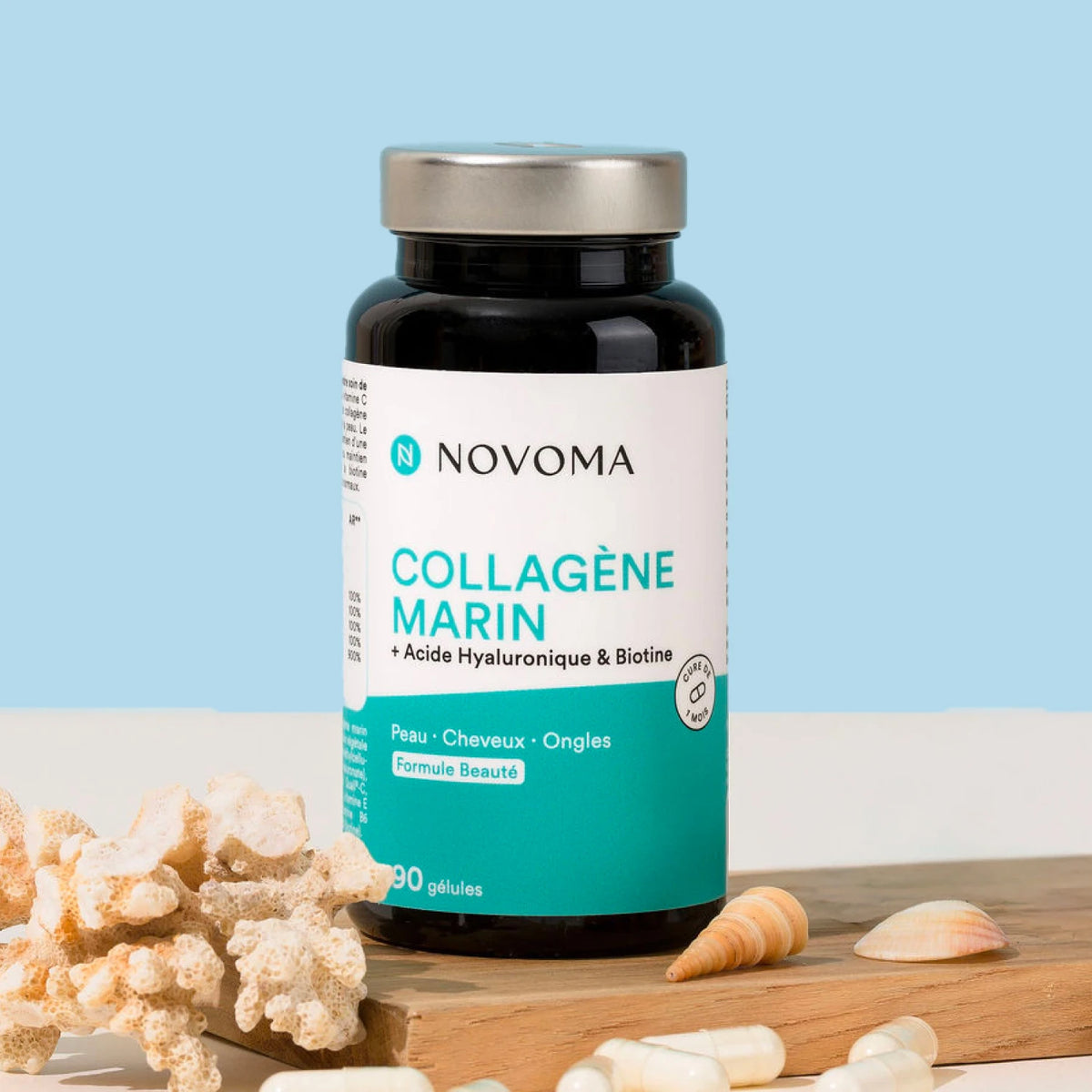

Promotes the beauty of the skin, hair, and nails
- ✔️ 10% off every order
- ✔️ No commitment
- ✔️ 100% flexible: change with one click


Efficacy approved by our customers
Test carried out on a panel of 40 consumers for 1 month.

Why choose our Marine Collagen?

Marine collagen type I and III selected for its bioavailability
Low molecular weight peptides
A traceable and certified ingredient
A beauty formula enriched
Designed and manufactured in France
Composition

Marine Collagen Type I Naticol®
Essential protein for the structure of the skin and tissues. Hydrolyzed marine collagen peptides, highly bioavailable (2000 Da), of Naticol® quality.

Hyaluronic Acid
A substance naturally present in the skin, known for its exceptional ability to retain water, thereby promoting hydration and skin elasticity.

Vitamin C Quali®-C
Powerful antioxidant known to support immunity, reduce fatigue, aid in iron absorption, and contribute to collagen formation for skin, bones, and blood vessels.

Nutrabiol E® Vitamin E
Vitamin with an antioxidant role, contributing to the protection of cells against oxidative stress.

Zinc Bisglycinate
Highly absorbable form of zinc, contributing to the proper functioning of the immune system, the health of the skin, hair, nails, and protection against oxidative stress.

Vitamin B6 (P5P)
Active form of vitamin B6, involved in the normal synthesis of proteins, energy metabolism, and the reduction of fatigue, while supporting the nervous system.

Biotin
Nicknamed the “beauty vitamin,” biotin is an essential vitamin for maintaining the health of hair, nails, and skin.

Marine Collagen Type I Naticol®
Hyaluronic Acid
Vitamin C Quali®-C
Nutrabiol E® Vitamin E
Zinc Bisglycinate
Vitamin B6 (P5P)
Biotin
- Marine Collagen Naticol®1000 mg
- Hyaluronic Acid100 mg
- Vitamin C80 mg
- Vitamin E 12 mg
- Zinc10 mg
- Vitamin B61,4 mg
- Biotin (vitamin B8)450 μg
- Marine Collagen Naticol®-
- Hyaluronic Acid-
- Vitamin C100%
- Vitamin E 100%
- Zinc100%
- Vitamin B6100%
- Biotin (vitamin B8)900%
Origin
Supplier
Recommended by pharmacists


What our customers are saying about Novoma Marine Collagen
Read testimonials from those who use our products daily! 💚
Which collagen to choose?


When will I feel the effects?
-
Every day
Take 3 capsules with a large glass of water.
-
1 month
Consistency is taking root. Continue your daily routine to support the natural renewal of collagen.
-
3 months
This is the recommended treatment duration. Your skin is visibly more hydrated. Your hair and nails are stronger.

Long-term treatment tip
-10%
Switch to subscription and save 10% on every order. Subscribe now →
Your questions about Marine Collagen
What is collagen?
How does collagen work in the body?
Marine or bovine collagen: which one to choose?
Type I, II, or III collagen: which one to choose and why?
How to choose the right collagen?
What is the molecular weight of your marine collagen?
Which fish is your collagen sourced from?
Why combine marine collagen with hyaluronic acid?
What is the role of vitamins C and E in the formula?
What is the difference between collagen in capsules and collagen in powder?
How does collagen work in the body?
What is marine collagen used for?
Does collagen remove wrinkles?
Does marine collagen cause weight gain?
How long should a collagen course last?
At what age hould you start taking collagen?
Does collagen remove wrinkles?
I am vegan/vegetarian. Which other product should I choose?
Is marine collagen effective?




If you cannot find the information you are looking for, please consult our FAQ or contact us via 24/7 chat. You can also reach us by:


