








What is the role of antioxidants?
Every day, your body produces free radicals. These molecules arise from the normal functioning of cells, particularly from respiration and metabolism, which convert nutrients into energy.
In normal quantities, they are useful. For instance, they participate in cell communication and immune response. However, when they become too numerous, they can weaken cellular components.
Antioxidants neutralize this excess of free radicals and thus contribute to cellular balance (3). Some are manufactured by the body, while others come from the diet. When the diet is not enough to meet these needs, supplementation can take over.
The major families of antioxidants
There are three main families of antioxidants, categorized by their origin:
- Endogenous antioxidants, naturally produced by the body, such as glutathione, superoxide dismutase, or ubiquinol.
- Exogenous antioxidants provided by food: vitamins C, E, and B2, as well as the minerals zinc, selenium, copper, and manganese. To date, these are the only nutrients for which the EFSA allows the claim that they help protect cells against oxidative stress (1).
- Plant compounds studied for their role in cellular balance, such as polyphenols, carotenoids, and flavonoids.
What is oxidative stress?
Oxidative stress corresponds to an imbalance between the amount of free radicals produced and the body's ability to neutralize them. Most of the time, this imbalance remains temporary and the body corrects it on its own. However, when production sustainably exceeds the available defenses, the excess of free radicals gradually weakens the cells (3).
This long-term increase in free radicals can be promoted by smoking, pollution, a sedentary lifestyle, prolonged sun exposure, or periods of psychological stress. A poorly varied diet can also limit the intake of nutrients necessary for cellular balance.
This imbalance can manifest in various ways, from skin signs to a feeling of fatigue, as well as a progressive degradation of cells. Maintaining a good balance primarily relies on healthy lifestyle habits, such as staying active, taking care of your sleep, and protecting yourself from UV rays. Sufficient intake of antioxidant vitamins and minerals complements these good habits (2).
Which foods contain the most natural antioxidants?
Diet remains the primary source of nutrients useful for cellular balance. To take full advantage of them, vary the colors and food families throughout your meals, as each brings different compounds.
Certain families are particularly well-provided with natural antioxidants:
- Spices: turmeric, ginger, cinnamon, cloves.
- Herbs and aromatics: garlic, onion, parsley.
- Berries and red fruits: blueberries, raspberries, blackberries, strawberries, blackcurrants, cherries, pomegranates.
- Citrus fruits: oranges, lemons, grapefruits.
- Vegetables: broccoli, cabbage, spinach, beetroot, carrots, sweet potatoes, arugula.
- Nuts and seeds: almonds, walnuts, hazelnuts.
- Wheat germ, dark chocolate with at least 70% cocoa, and green tea.
These foods provide vitamin C, vitamin E, zinc, and selenium, which help protect cells against oxidative stress (1), as well as plant compounds studied for their role in cellular balance.
To preserve these nutrients, opt for fresh, seasonal products and limit long cooking times that can reduce their nutritional content. A few combinations also help improve absorption: turmeric, for example, is better absorbed with black pepper and a small amount of fat.
Antioxidants in dietary supplements
When the diet is poorly varied and does not supply enough antioxidant micronutrients, supplementation helps secure your intake. It provides regular doses in forms chosen for their bioavailability.
There are four major categories of active ingredients in antioxidant-rich dietary supplements:
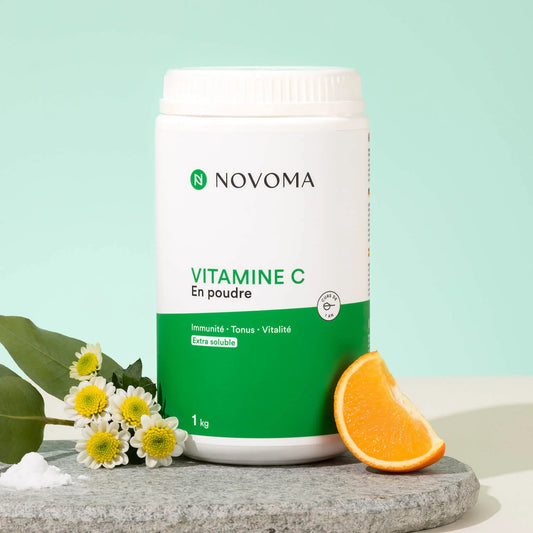
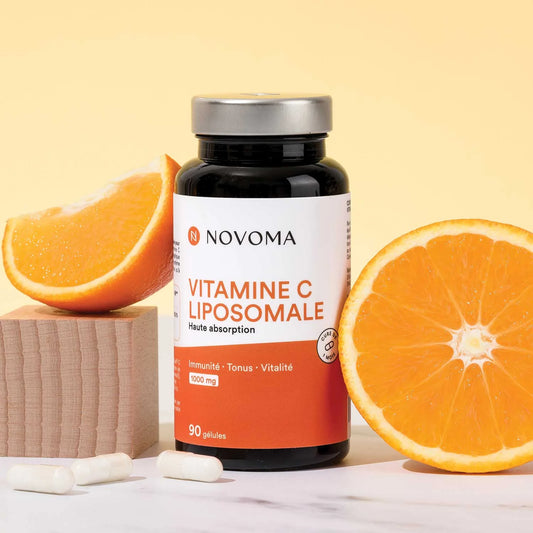
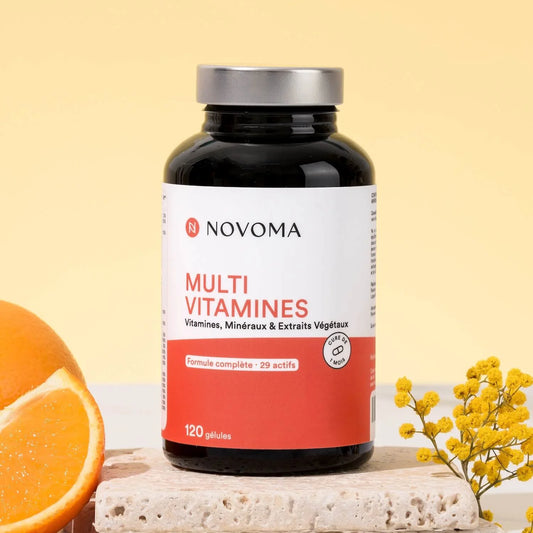
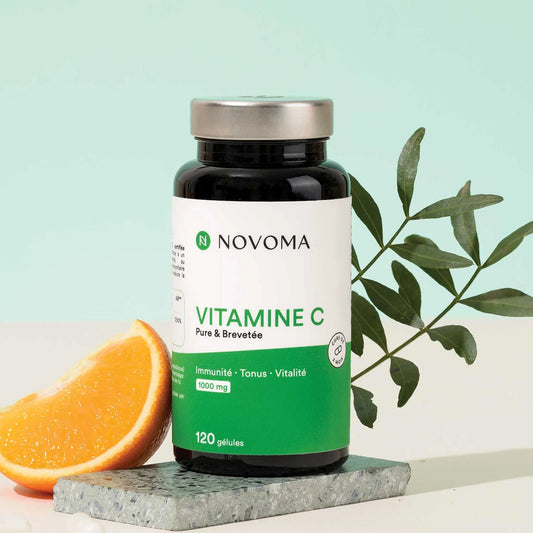
Vitamin C, vitamin E, and vitamin B2: these vitamins help protect cells against oxidative stress (1). At Novoma, you will find them notably in our Liposomal Vitamin C and our Multivitamins formula. The liposomal form encapsulates vitamin C to promote its absorption, while the multivitamins combine several of these nutrients in a single dose.
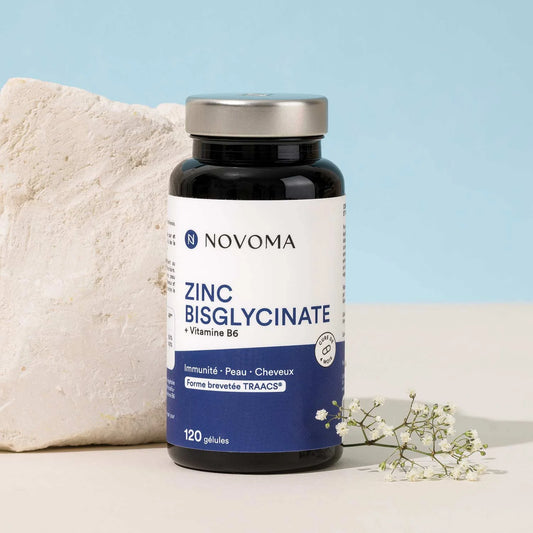
Zinc, selenium, copper, and manganese: these minerals help protect cells against oxidative stress (1). At Novoma, we offer zinc in its bisglycinate form, a chelated form that is particularly well assimilated, and you will find selenium in our multivitamins.
Polyphenols, carotenoids, and flavonoids: naturally present in plants, they complement vitamin and mineral intake and contribute to the nutritional richness of the diet. They are studied for their role in cellular balance.
Curcumin, coenzyme Q10, or resveratrol: these active ingredients are often integrated into more targeted formulas, in addition to vitamins and minerals.
Depending on your needs, you can opt for a targeted active ingredient or a comprehensive formula that combines several vitamins and minerals.
Why choose Novoma antioxidant dietary supplements?
We designed this range around a simple principle: choosing the right active ingredients, providing them in the right forms, and integrating them into clean formulas.
That is why we prioritize highly bioavailable forms, such as liposomal vitamin C, encapsulated to cross the intestinal barrier more easily, and zinc bisglycinate, a chelated form that is very well tolerated.
Each formula is made in France, in a long-standing partner laboratory selected for its quality standards, and meets a clean-label requirement: GMO-free, without artificial colors or preservatives.
The dosages are calibrated to reach the thresholds approved by the EFSA, a necessary condition for these active ingredients to contribute to protecting cells against oxidative stress (1).
Our certificates of analysis are available for each batch, ensuring full transparency regarding the actual composition of each of our antioxidant dietary supplements.
Precautions and points of vigilance
Antioxidant dietary supplements do not replace a varied and balanced diet or a healthy lifestyle. A few points of vigilance:
- Prolonged supplementation at high doses can disrupt the body's natural redox balance. Scientific literature shows that excessive intake does not always provide benefits and can, in certain cases, be counterproductive (4).
- In case of medical treatment, medical advice is recommended before any supplementation, particularly during oncological treatment. Certain interactions have been documented between high-dose antioxidants and chemotherapies.
- Avoid combining multiple supplements containing the same active ingredients to prevent exceeding recommended doses.
- Seek prior medical advice if you are pregnant or breastfeeding.
Expert's note
[INSERT HERE: Expert's note — visually distinct box, 50-80 words. First name + qualification (author to be confirmed by Novoma). Educational advice on the importance of a regular intake of vitamins and minerals and the complementary role of supplementation compared to a varied diet. Link to author page as soon as it goes live.]
Scientific references
- EFSA, Commission Regulation (EU) No 432/2012 of 16 May 2012 establishing a list of permitted health claims made on foods. https://eur-lex.europa.eu/legal-content/EN/TXT/HTML/?uri=CELEX:32012R0432
- ANSES (2021). Update of French dietary reference values for vitamins and minerals. https://www.anses.fr/en/content/dietary-reference-values-vitamins-and-minerals
- Pisoschi AM, Pop A, 2015. The role of antioxidants in the chemistry of oxidative stress: A review. European Journal of Medicinal Chemistry, 97, 55-74. https://pubmed.ncbi.nlm.nih.gov/25942353/
- Bjelakovic G et al., 2012. Antioxidant supplements for prevention of mortality in healthy participants and patients with various diseases. Cochrane Database of Systematic Reviews, 3, CD007176. https://pubmed.ncbi.nlm.nih.gov/22419320/
Frequently Asked Questions About Antioxidant Supplements
Which vitamins are naturally antioxidant ?
What is the best antioxidant dietary supplement?
Are antioxidant dietary supplements useful for the skin?
When should you consider taking an antioxidant dietary supplement?
Can you combine an antioxidant with other dietary supplements?
What are the risks of antioxidant supplementation?
Les articles les plus lus
Si vous ne trouvez pas les informations que vous cherchez, n’hésitez pas à consulter notre FAQ ou à nous écrire sur le chat 24/24. Vous pouvez aussi nous contacter :


