















What is a plant-based food supplement?
A plant-based food supplement is a product formulated from a plant or one of its extracts, in a form easy to take daily, such as capsules, powder, or tablets.
Depending on the formulas, it may contain the whole plant, plant powder, or a standardized extract:
The whole plant and powder retain the natural compounds of the plant, with a variable or moderate concentration.
The standardized extract, on the other hand, concentrates one or more identified compounds at a precise and constant percentage from one batch to another. This is the form we prioritize at Novoma, as it allows for more rigorous dosing.
The use of plants to address certain daily needs falls under phytotherapy. This discipline relies on traditional uses, sometimes millennia-old, which are now progressively documented by scientific research.
For some plants, these traditional uses are now recognized and regulated at the European level by the European Medicines Agency (2).
The benefits of plant-based food supplements
The traditional use of plants can be grouped into four main families:
- Adaptogenic support: plants like ashwagandha, ginseng, or rhodiola are traditionally used to support the body's resistance during demanding periods.
- Digestive comfort: turmeric and ginger are among the most used plants in phytotherapy to support digestive well-being.
- Natural nutritional intake: some plants are true sources of vitamins and minerals, such as spirulina, naturally rich in protein, iron, and beta-carotene, or acerola, one of the most concentrated natural sources of vitamin C.
- Relaxation and sleep: passionflower and valerian are traditionally valued for promoting quality sleep and relaxation.
Key plants in our range
Ashwagandha
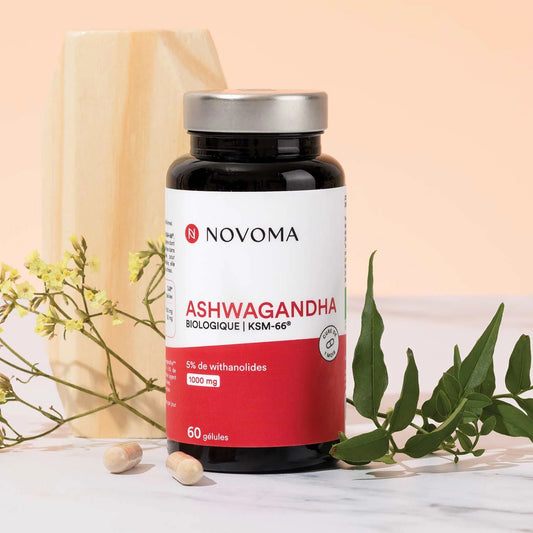
Ashwagandha is an adaptogenic plant used for millennia in Ayurvedic tradition. Our organic KSM-66® ashwagandha is the most clinically studied form, with 24 published studies to date (3)(4).
The KSM-66® form guarantees precise standardization of the withanolide content, the main active compounds in the root. The initial effects of a course gradually appear, depending on individual profiles and the duration of intake.
Turmeric
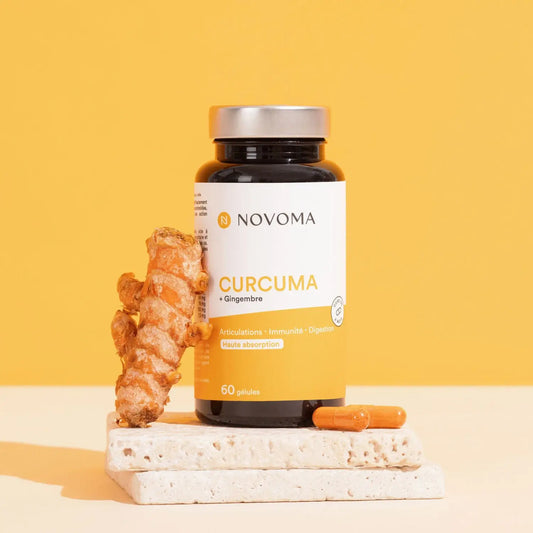
Turmeric is a spice native to India, traditionally used for digestive and joint comfort. Its active ingredient, curcumin, has naturally low bioavailability, which is why our Turmeric is formulated to optimize its assimilation.
ANSES indicates that turmeric can interact with certain medications (1), particularly anticoagulants and antacids: in case of ongoing treatment, medical advice is necessary.
Spirulina
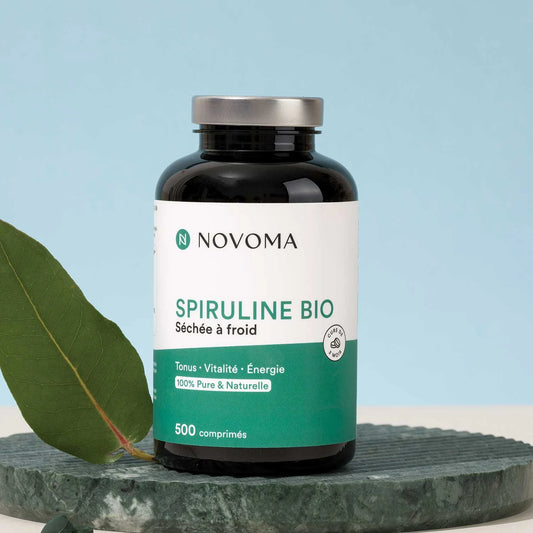
Spirulina is a freshwater microalga consumed since ancient times, naturally rich in vegetable protein, iron, beta-carotene, and B12. However, the vitamin B12 it contains is mainly in an inactive form and cannot replace bioactive B12 supplementation for vegans. Our Organic Spirulina comes from certified organic farming.
Acerola
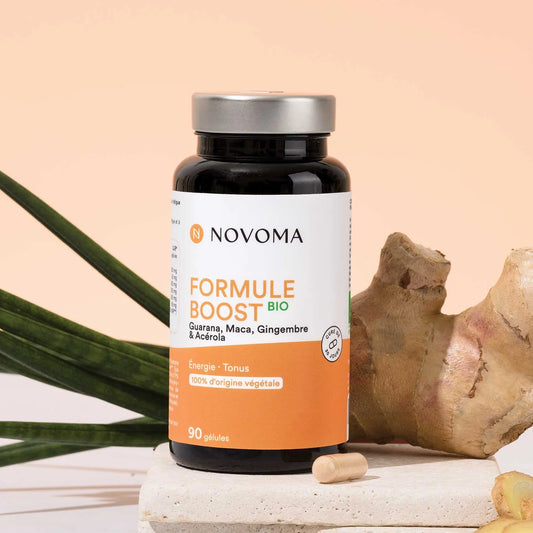
Acerola, a small fruit native to South America, is one of the most concentrated natural sources of vitamin C. This essential vitamin is involved at several levels: it helps reduce fatigue, supports the normal functioning of the immune system, protects cells against oxidative stress, and contributes to normal collagen formation. Our Organic Acerola is also certified organic and standardized in natural vitamin C.
How to choose a quality plant-based food supplement?
Several criteria are worth examining to assess the actual quality of a plant-based food supplement. The mention "natural" on a label is not enough on its own.
- Standardization: a standardized plant extract clearly indicates the guaranteed percentage of active ingredient, for example, 5% withanolides for ashwagandha.
- Appropriate dosage: even if well standardized, an underdosed extract loses much of its interest.
- Organic certification, associated with a formula without controversial additives or excipients, guarantees a clean formula, free from pesticide residues or superfluous ingredients.
- Patented forms, such as KSM-66® or Meriva®, provide additional guarantees through a documented process and enhanced controls.
- Traceability allows knowing the origin of the plant and ensuring that it comes from a well-identified supply chain.
- French manufacturing and the publication of analysis certificates are concrete guarantees of transparency.
At Novoma, this commitment to quality is reflected in our commitments and our formulation choices: standardized extracts, bioavailable and bioactive forms, patented raw materials, effective dosage, clean label, and French manufacturing.
Precautions and contraindications
Natural does not mean risk-free (1). This is the message conveyed by ANSES in its work on plant-based food supplements, and it is also the position we advocate.
Drug interactions
Certain plants can interact with medicinal treatments (1). St. John's Wort, turmeric, ashwagandha, and ginseng can notably interact with anticoagulants, antidepressants, or thyroid treatments. Before any course of plant-based food supplements, inform your pharmacist or doctor about your current treatments. Consult the list of 118 medicinal plants requiring precautions for use published by ANSES (1).
Pregnant and breastfeeding women
The majority of plant-based food supplements are not recommended during pregnancy and breastfeeding. Available data on their safety in these situations remain insufficient. Ask your doctor or pharmacist for advice before taking any.
Children and adolescents
Plant-based food supplements are generally not suitable for children. Each product indicates a recommended minimum age: read the label carefully before any use in a minor.
Adverse effects and Nutrivigilance
In case of an adverse effect after taking a plant-based food supplement, stop the course and report it to the ANSES Nutrivigilance system (5). Each report helps to better understand and prevent risks associated with these products.
Plant-based food supplements: do they really work?
Yes, in practice, traditional uses have shown the usefulness of certain plants, and some now benefit from solid clinical studies, such as KSM-66® ashwagandha (3)(4).
However, the effectiveness of supplements is not automatic: it depends on the quality of the extract, its dosage, and the regularity of intake over a sufficient period. A too short course or an extract too poor in active ingredients severely limits the effectiveness of the formula.
From a regulatory perspective, health claims for most plants are still awaiting evaluation by the EFSA. This does not mean that plant-based food supplements are ineffective, but that the available clinical data are not yet numerous or robust enough for EFSA to evaluate the merits of these claims.
Plant-based food supplements do not replace a balanced diet and a healthy lifestyle. Natural does not mean risk-free: some plants may have contraindications, drug interactions, or adverse effects. Before any course, it is recommended to seek advice from a healthcare professional (pharmacist, doctor, nutritionist). Plant supplements are not recommended for pregnant and breastfeeding women, as well as children, unless medically advised. In case of an adverse effect, report it to ANSES Nutrivigilance (5).
Scientific references
- ANSES. Plant-based food supplements: towards better consumer information. 08/06/2023. https://www.anses.fr/fr/content/complements-alimentaires-base-de-plantes-vers-une-meilleure-information-des-consommateurs
- ANSES. Opinion on the assessment of the relevance of applying warnings and recommendations expressed in EMA herbal monographs to food supplements containing the same plants. Referral no. 2019-SA-0155. https://www.anses.fr/fr/system/files/NUT2019SA0155.pdf
- Ixoreal Biomed. Clinical Studies – KSM-66 Ashwagandha. https://ksm66.fr/etudes-cliniques/
- Chandrasekhar K, Kapoor J, Anishetty S. (2012). A Prospective, Randomized Double-Blind, Placebo-Controlled Study of Safety and Efficacy of a High-Concentration Full-Spectrum Extract of Ashwagandha Root in Reducing Stress and Anxiety in Adults. Indian Journal of Psychological Medicine, 34(3), 255–262. https://pubmed.ncbi.nlm.nih.gov/23439798/
- ANSES. National Nutrivigilance System – 2018 Annual Report. https://www.anses.fr/fr/system/files/ANSES-Ft-BilanNutrivigilance2018.pdf
- National Council of Pharmacists. Plant-based food supplements: better informing patients. 15/06/2023. https://www.ordre.pharmacien.fr/les-communications/focus-sur/les-actualites/complements-alimentaires-a-base-de-plantes-mieux-informer-les-patients
The information on this page does not replace the advice of a healthcare professional. Food supplements do not substitute for a varied and balanced diet or a healthy lifestyle. In case of doubt, consult a healthcare professional.
Frequently Asked Questions about Plant Extracts
Are herbal supplements effective?
Are herbal supplements safe?
Why don't doctors recommend herbal supplements?
How long should a herbal cure last?
Can several herbal supplements be combined?
Les articles les plus lus


Si vous ne trouvez pas les informations que vous cherchez, n’hésitez pas à consulter notre FAQ ou à nous écrire sur le chat 24/24. Vous pouvez aussi nous contacter :


