








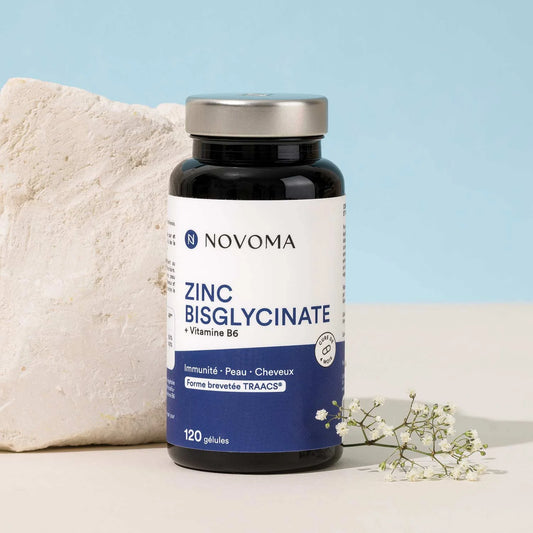

What is the point of food supplements for vegans?
A 100% plant-based diet provides plenty of fiber, antioxidants, and plant-based proteins. But some micronutrients are naturally absent or scarce, as they mainly come from animal products.
ANSES confirms this: vegetarians find it more difficult to meet their needs for iron and iodine, even if a well-structured diet can help reach nutritional benchmarks. Vitamin D remains difficult to cover, but this applies to the entire population, vegan or not. Finally, even optimized, a 100% plant-based diet does not cover the needs for vitamin B12, nor for zinc in men (1).
It is in this context that a food supplement for vegans makes perfect sense. It does not replace a varied plate; it complements the intake that plant-based food alone does not adequately provide. The objective is simple: to secure these intakes with formulas that respect your choice from start to finish.
Which food supplements should vegans choose?
Four active ingredients deserve special attention in a plant-based diet. Here they are, and why.
Vitamin B12
Vitamin B12 helps reduce fatigue, supports the normal functioning of the nervous system and the normal functioning of the immune system (2). It is the number one nutrient to monitor when you are vegan, as it is almost absent from the plant kingdom and even an optimized diet is not enough to cover needs (1).
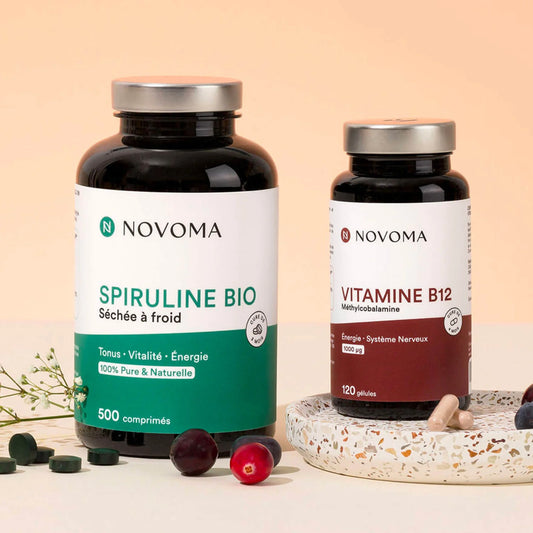
B12 supplementation is therefore the only reliable way to cover your needs. The challenge is to choose a well-absorbed form: our vitamin B12 is provided as methylcobalamin, the active form, which the body uses directly, without a conversion step.
Iron
Iron helps reduce fatigue and supports the normal transport of oxygen in the body (2). However, iron of plant origin, called non-heme iron, is less well absorbed than that of animal origin. Needs are therefore more difficult to cover with a vegan diet.
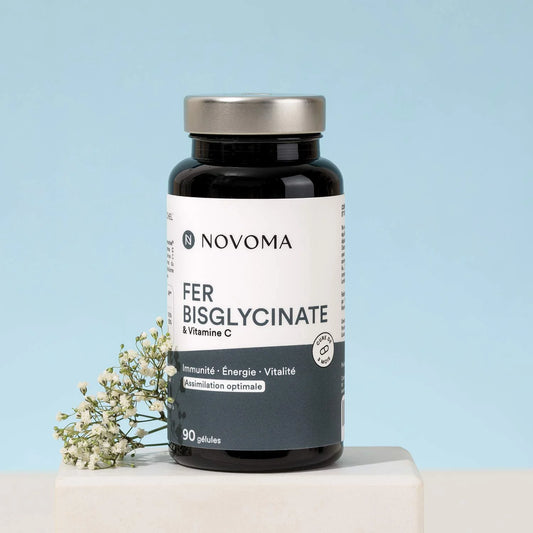
Hence the interest in choosing a better-absorbed form, such as our iron bisglycinate, which is also well tolerated digestively. As for your plate, also consider adding vitamin C, which increases the absorption of iron from plant sources (2).
Vitamin D
Vitamin D contributes to the normal functioning of the immune system and the maintenance of normal bones (2). The problem is that it becomes difficult to cover needs as soon as sun exposure decreases. Diet alone is not enough, especially in a vegan diet, as plants provide little of it.
Vitamin D supplementation is therefore common, including outside of a plant-based diet, but not all forms are suitable for vegans. Most D3 vitamins on the market are extracted from lanolin, an animal-derived material. Our plant-based vitamin D3 is extracted from algae, a 100% plant-based source.
Spirulina
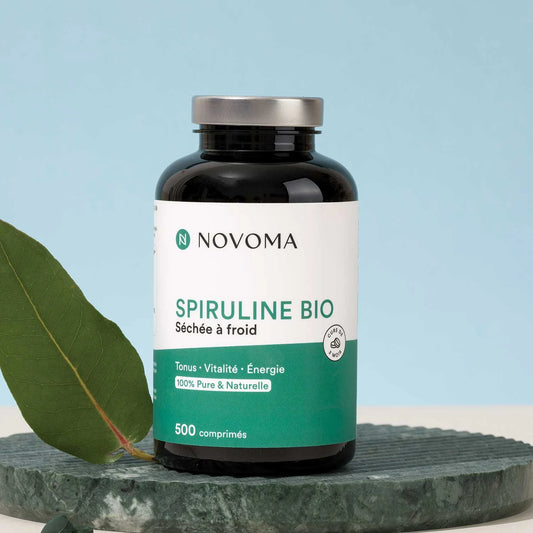
Spirulina is a freshwater cyanobacterium, rich in plant proteins, iron, and vitamins. This density of plant proteins makes it a particularly useful supplement when you eat neither meat nor fish. Our organic spirulina is dried and cold-pressed, a process that preserves its nutrient content.
What are the nutritional needs of a vegan diet?
A vegan adult has the same physiological needs as everyone else. It is the sources that change (3). When well-managed, a vegan diet already covers most essential nutrients, even those usually associated with animal products:
Proteins (0.83 g per kilogram of body weight (4)). Legumes, whole grains, and tofu provide enough, provided you vary the sources, as plant proteins are generally less well absorbed than animal proteins.
Calcium (950 mg per day after 25 years (5)). Without dairy products, it comes from calcium-rich waters, almonds, and leafy vegetables.
However, some points require vigilance, on which ANSES and the Vegetarian Association of France agree (3).
Vitamin B12 (4 µg). Unsurprisingly, it comes first: no plant-based diet provides it in sufficient quantity.
Iron (11 mg per day, 16 mg for women with heavy periods). Pumpkin seeds, sesame, lentils, and tofu are the main plant-based sources, but this iron is absorbed about half as well as iron from meat (6).
Zinc. Phytates in legumes and whole grains hinder its absorption, so the recommended intake increases from 9.4 to 14 mg for men and from 7.5 to 11 mg for women when these foods occupy a large place on the plate.
Vitamin D (15 µg) and omega 3 EPA and DHA. They are difficult to cover for the entire population, and, for omega 3s, even more so without fish. Flax and chia seeds only provide a plant precursor, which the body converts in small quantities.
Iodine (150 µg (5)). It remains accessible, but only with iodized salt and algae, whose content varies greatly.
To secure these daily intakes, vary legumes, whole grains, and oilseeds, and supplement where diet alone is not enough.
Our complete guide to vegan nutrition details the plant sources to prioritize and other tips for covering your nutritional needs.
Novoma's choices for vegans
A vegetable capsule, made of HPMC (K-Caps®) or pullulan, and no ingredients of animal origin: this is the starting point for this vegan selection. For the rest, our usual requirements apply.
The first is traceability. For each active ingredient in the selection, we know which country the raw material comes from and which supplier produced it. Nothing enters our formulas without us being able to trace its chain.
Next comes the choice of form. When a patented form provides a real gain in assimilation, we choose it over a standard, less well-absorbed version. This is the case for Ferrochel® iron bisglycinate. This type of ingredient costs more, but its effectiveness is documented.
Manufacturing meets the same requirements. Our formulas are GMO-free, gluten-free, and free of controversial additives. They are manufactured in France, in long-standing partner laboratories, according to the strictest safety standards.
Finally, you can verify everything: for each product, we publish the detailed composition and analysis certificates.
This demand for quality and transparency is not unique to our vegan range: it is part of our commitments across all our formulas.
Vegan supplements: what to check before choosing
A supplement may contain an animal-derived ingredient without it being obvious. Collagen is extracted from fish skin and bones, or from bovine and porcine tissues. Omega 3s come from fish oil. And vitamin D3 is most often derived from lanolin, a wax from sheep's wool.
The "vegan" label on the packaging helps, but it has no regulatory definition. Each brand decides what it covers. Reliable information is elsewhere, in the list of ingredients. Two lines deserve your attention:
- The first is the origin of the active ingredient: for vitamin D3, look for the mention algae or lichen.
- The second is the capsule shell: if the list indicates gelatin, the product is of animal origin. A vegetable capsule, on the other hand, is designated by its material: HPMC or pullulan.
These two pieces of information are enough to make a decision, regardless of the brand.
The information presented on this page is for informational purposes only and does not replace the advice of a health professional. Food supplements are not a substitute for a varied and balanced diet or a healthy lifestyle. Do not exceed the recommended daily dose.
Scientific References
- ANSES (2025). Vegetarian diets: health effects and dietary guidelines (referral 2019-SA-0118). anses.fr
- European Commission. Regulation (EU) No 432/2012 establishing a list of permitted health claims made on foods. eur-lex.europa.eu
- Association végétarienne de France (2025). Nutritional guidelines for vegetarian diets, according to ANSES. vegetarisme.fr
- ANSES. Proteins: role, sources, and recommended intake. anses.fr
- ANSES (2025). Nutritional reference values for vitamins and minerals. anses.fr
- Hurrell R., Egli I. (2010). Iron bioavailability and dietary reference values. Am J Clin Nutr, 91(5):1461S-1467S. pubmed.ncbi.nlm.nih.gov
Frequently Asked Questions about Vegan Supplements
How to prevent deficiencies when you're vegan?
Which supplements should vegans choose?
What foods contain vitamin B12 for vegans?
Which vegan supplement during pregnancy?
Which food supplements for vegetarian athletes?
Les articles les plus lus

Si vous ne trouvez pas les informations que vous cherchez, n’hésitez pas à consulter notre FAQ ou à nous écrire sur le chat 24/24. Vous pouvez aussi nous contacter :


