Sensitive skin routine: Soothe and strengthen skin every day

Summary
Sensitive skin is skin that feels tight, hot, or reddens easily when faced with changes in temperature, cosmetics, or external aggressions. 😊 This reactivity deserves constant attention with gentle, tailored care. By adopting a tailor-made sensitive skin routine, you can soothe daily discomfort and sustainably strengthen your skin barrier. Follow the 6 steps of our routine to gently protect, moisturize, and desensitize reactive skin . 🌿
Why is a suitable routine essential for sensitive skin?
Sensitive skin is more vulnerable than other skin types and deserves special attention.
Understanding Sensitive Skin
Hypersensitive skin reacts excessively to external aggressions and internal imbalances:
Weather conditions: cold, heat, wind, etc.
The use of certain aggressive or unsuitable cosmetics;
UV rays;
Poor diet;
Hormonal changes.
This sensitivity can be natural or acquired . In both cases, it is a sign of unbalanced skin and a fragile skin barrier that no longer sufficiently protects the skin from aggressions.
Without this thin protective layer of sebum and water, the skin overreacts to pollution, cold, chemicals, bacteria, etc. It is then more prone to inflammation , a completely normal reaction to combat these attacks.
Then begins the redness, irritation, sensations of heating, tingling, tightness and itching typical of intolerant skin .
The key role of routine: soothing and preventing
Caring for sensitive skin is both about putting out fires and preventing fires. The goal is to improve your skin's tolerance so that you have fewer and fewer fires to put out over time.
To do this, you need to adopt a sensitive skin routine specially designed for:
Calm these excessive reactions in the moment by soothing the skin;
Rebalance your skin and gradually restore its protective film.
By caring for your skin daily with gentle, non-irritating, moisturizing products specifically formulated for sensitive skin , you will avoid many future irritations.
Step 1: Gentle cleansing to purify without harming
Cleansing is a key step in removing impurities , bacteria and pollution accumulated during the day, but it must be done delicately.
Action
Gentle cleansers help prevent irritation and dryness, two factors that exacerbate skin sensitivity by weakening the skin's hydrolipidic film.
Advice
Choose a gentle cleansing gel or micellar water without perfume or alcohol that respects the skin's balance.
-
Opt for cleansers enriched with soothing active ingredients such as aloe vera or thermal water for an immediate calming effect.
Rinse with lukewarm water. Avoid excessively hot water, which can sensitize the skin.
Gently pat your skin dry, never rub. Use a soft towel.

Step 2: Apply a tonic or thermal water to immediately soothe
After cleansing, it is important to immediately soothe the skin and rebalance its pH.
Action
A toner or thermal water immediately soothes irritations, calms redness and tightness while preparing the skin for treatment. They also help restore a protective film.
Advice
Choose thermal water rich in minerals to soothe redness and calm irritation.
-
A toner suitable for sensitive skin will balance the skin's pH, while strengthening its natural protection against external aggressions.
Step 3: Soothing serum to treat deep sensitivity
Serums are concentrates of active ingredients that penetrate deep into the skin to treat problems at the source.
Action
A soothing serum directly targets the causes of skin sensitivity. It deeply hydrates the skin to strengthen it. Used daily , it improves the skin's ability to defend itself against aggressions and reduces long-term skin reactions .
Advice
Opt for a serum containing ingredients like niacinamide, hyaluronic acid, or centella asiatica, all known for their ability to hydrate and calm sensitive skin.
-
Apply it after toner and before moisturizer to maximize absorption.

|
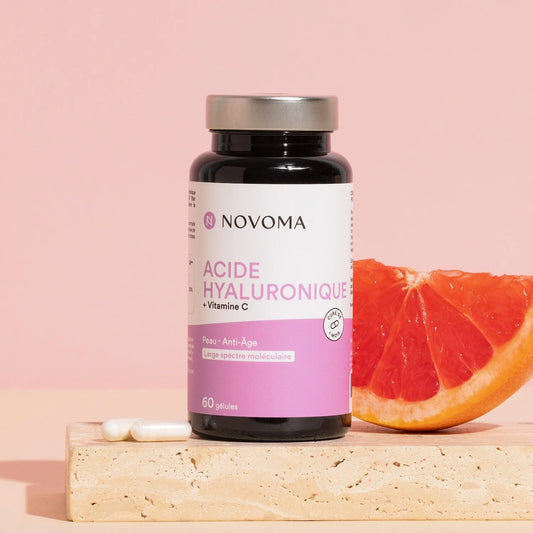
Remember that the skin is an organ, it needs to be nourished and hydrated from the inside, as well as from the outside. Incorporate hyaluronic acid supplements into your sensitive skin routine for an “in and out” approach. Hyaluronic acid strengthens your skin's ability to retain water in its cells. Your skin is naturally hydrated and supple. |
Step 4: Moisturizer to protect and strengthen the skin barrier
Hydration is essential for all skin types, but especially sensitive skin.
Action
A suitable cream will not only seal in moisture , but also strengthen its protective barrier. The skin is comfortable and protected against external aggressions, such as pollution or climatic variations.
Advice
Choose creams enriched with ceramides, shea butter or squalane for intense hydration.
Choose formulas without perfume or harsh preservatives.
Apply your moisturizer regularly to prevent dehydration, reduce redness and tightness, and keep skin soothed throughout the day.
|
The composition to choose for your moisturizer depends on your skin:
Your skin's protective layer needs oil and water to balance and stay protected. You need to provide it with what it lacks to gradually rebalance it. |
Step 5: Daily sun protection to prevent irritation
UV rays aggravate skin sensitivity because they damage skin cells.
Action
Daily sun protection is essential to prevent UV damage to the skin barrier. Remember that UV rays are harmful even if you don't expose yourself to direct sunlight and even on cloudy days.
Advice
Use a mineral sunscreen based on zinc or titanium, which limits the risk of irritation.
Choose fragrance-free formulas to avoid allergic reactions.

Step 6: Weekly soothing masks to rebalance and soothe
Hydrating and soothing masks help repair and nourish the skin intensely.
Action
A weekly soothing mask will provide intense care that will calm irritations, strengthen your skin's natural defenses, and prevent overreactions. They provide immediate comfort and act as a shield against external aggressions.
Advice
Apply a soothing mask once or twice a week to restore balance to your skin.
Choose formulas with colloidal oatmeal, aloe vera, or allantoin, known for their calming properties.
Adopting a sensitive skin routine is essential for calming skin reactions, but also for gradually restoring and strengthening the skin's natural protection. By following these simple steps and choosing the right products, you can say goodbye to redness, tightness, and other skin discomforts.