How much zinc can one safely consume daily?

💡 Key takeaways
Respecting the maximum dose of zinc is primarily about ensuring you benefit from its advantages without creating an imbalance. With 15 mg per day from a quality supplement like Novoma bisglycinate , you're giving your body what it needs, with complete peace of mind. ✨
Summary
Zinc is one of those trace elements we often hear about, but whose correct dosages aren't always clear on. Yet, it's all about balance: too little, and your body can't function optimally; too much, and you risk creating imbalances. Don't panic! We'll explain everything you need to know about daily requirements and safety limits so you can fully enjoy the benefits of this mineral, with complete peace of mind. 😊
What is the maximum daily dose of zinc?
Definition and regulatory framework of the maximum dose
In practical terms, the maximum daily intake of zinc corresponds to the upper safety limit established by European health authorities. This threshold represents the amount of zinc a person can consume each day without risking adverse health consequences. ANSES (the French Agency for Food, Environmental and Occupational Health & Safety) and EFSA (the European Food Safety Authority) set this limit at 40 mg per day for a healthy adult.
This value encompasses all sources of zinc: natural foods and combined dietary supplements. Adhering to this limit ensures optimal mineral utilization while avoiding metabolic disturbances associated with prolonged excess. Let's examine this further.
Official recommendations based on profiles
Daily nutritional needs vary considerably depending on age, sex, and specific physiological situations. Here's a short guide to help you understand them better, with guidelines established by European authorities:
Profile |
Recommended intake |
Maximum tolerated dose |
Adult male |
11 mg/day |
40 mg/day |
Adult woman |
8 mg/day |
40 mg/day |
Pregnant woman |
10-11 mg/day |
40 mg/day |
Breastfeeding woman |
12-13 mg/day |
40 mg/day |
Child 1-3 years old |
3 mg/day |
7 mg/day |
Child 4-8 years old |
5 mg/day |
12 mg/day |
Teenager 9-13 years old |
8 mg/day |
23 mg/day |
Teenager 14-18 years old |
11 mg/day (boys), 9 mg/day (girls) |
34 mg/day |
Men have slightly higher needs due to their more developed muscle mass and specific metabolism.
Specific considerations for vulnerable populations
Children have significantly lower safety thresholds than adults. Even moderate excess can quickly lead to health problems in young children. For this population, prioritizing natural food sources remains the safest strategy, unless specifically recommended by a health professional.
Breastfeeding women have increased nutritional needs to ensure optimal breast milk quality. During this period, an intake of 12 to 13 mg per day supports both mother and child. However, the 40 mg limit still applies and should not be exceeded, even with supplementation. It's simpler than it seems: adhering to these guidelines is enough to maintain your balance.

Why adhere to the maximum amount of zinc?
The specific risks of excessive zinc intake
Regularly exceeding the maximum recommended dose of zinc triggers a cascade of disruptions in the body. The first mechanism involved? Interaction with copper, another trace element your body needs. Excess zinc inhibits copper absorption in the intestines, gradually creating a mineral imbalance.
This interference typically appears after several weeks of overconsumption at doses exceeding 50 mg per day. Disruption of copper metabolism leads to a decrease in the production of certain enzymes necessary for oxygen transport in the blood. You don't need to be an expert to understand that balance is essential! ⚖️
Observable signs of a zinc overdose
The consequences of excess zinc appear gradually depending on the intensity and duration of overconsumption:
In the short term (a few days):
– marked digestive discomfort;
– persistent nausea;
– abdominal discomfort;
– feeling of heaviness after meals.
In the medium term (several weeks):
– unusual fatigue;
– recurring headaches;
– increased physical fragility;
– appetite disturbance.
Long term (several months):
– alteration of immune function;
– persistent drop in energy;
– modification of red blood cell formation;
– disruption of the balance between minerals.
Drug and nutritional interactions to be aware of
Zinc interacts with several categories of substances. Nutritionally, calcium and iron compete with zinc for absorption. Taking these minerals at different times of the day optimizes the assimilation of each. Why not keep it simple? Space out your doses , and everything will be fine.
What dosage is needed for an effective and safe zinc treatment?
Determine the daily amount that suits your needs
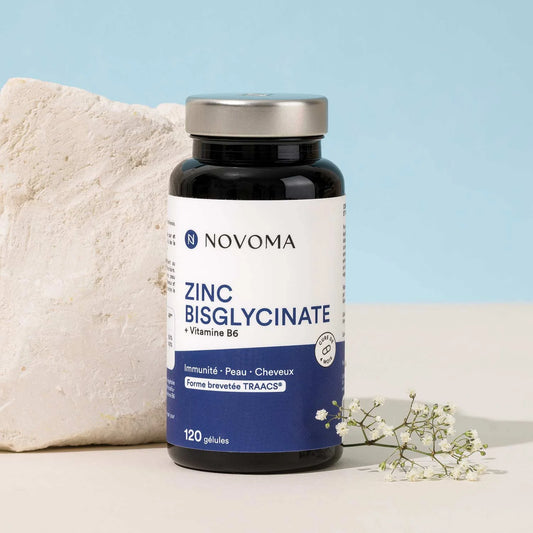
For most adults, a daily intake of 15 mg from a dietary supplement represents a balanced strategy. This amount complements the average dietary intake (between 8 and 12 mg depending on the diet) without approaching the safe limit of 40 mg. Novoma zinc bisglycinate offers precisely this dosage in a daily capsule, making it easy to maintain a consistent intake.
This dosage is particularly suitable for people who follow a varied diet but wish to support their body during periods of physical vulnerability or seasonal changes. Intensive athletes can also benefit from this dosage to compensate for increased mineral loss. It all depends on your needs!
Optimal duration of a zinc treatment
A zinc supplement regimen typically lasts 8 to 12 weeks . This period allows the body to replenish its reserves while fully benefiting from the mineral's properties. For skin health, particularly to support skin balance , a minimum of 2 months is necessary to observe visible results.
Some people opt for alternating cycles: two months of supplementation followed by a one-month break. This approach prevents excessive accumulation and allows the body to maintain its natural balance of trace elements . After each cycle, reassessing your needs allows you to adjust your supplementation strategy.
Practical tips for optimal use
The timing of intake directly influences the supplement's effectiveness. Zinc absorption is highest between meals, ideally 1 to 2 hours before or after eating. This strategy avoids interactions with certain food compounds such as phytates in whole grains or tannins in tea and coffee.
For those with sensitive digestion, taking the capsule with a small, light snack (a few dried fruits or a plain yogurt) is an acceptable alternative. The key? Maintaining a daily routine, preferably at the same time each day, to optimize results.
The morning on an empty stomach or the evening before bed are the two preferred times for most users. Everyone can adjust according to their personal tolerance and lifestyle. 🕐
We recommend

Zinc Bisglycinate
Synergistic formula based on Zinc Bisglycinate and vitamin B6.
- ✅ High-absorption zinc
- ✅ 15 mg of Zinc per capsule
- ✅ Made in France
- ✅ 4-month treatment
Natural zinc vs. dietary supplement: how to choose?
The main dietary sources of zinc
Diet naturally provides zinc in varying amounts depending on your nutritional choices. Animal products offer greater bioavailability than plant-based foods, meaning your body more easily absorbs the mineral from these sources.
Food category |
Examples |
Approximate content |
Bioavailability |
Seafood |
Oysters, crab |
20-40 mg/100g |
Excellent (40-50%) |
| Red meats |
Beef, lamb |
5-8 mg/100g |
Very good (30-40%) |
Offal |
Calf's liver |
12-15 mg/100g |
Very good (30-40%) |
Poultry |
Chicken, turkey |
2-3 mg/100g |
Good (25-35%) |
Legumes |
Lentils, chickpeas |
1-3 mg/100g cooked |
Moderate (15-20%) |
Seeds |
Pumpkin, sesame |
7-10 mg/100g |
Moderate (15-20%) |
Nuts |
Cashews, almonds |
5-6 mg/100g |
Moderate (15-20%) |
Whole grains |
Oats, quinoa |
2-4 mg/100g cooked |
Low (10-15%) |
People following a vegetarian or vegan diet may require slightly increased intake to compensate for the lower bioavailability of plant-based sources. Phytates found in legumes and whole grains form complexes with zinc, limiting its intestinal absorption.
When to choose a dietary supplement
Supplementation becomes relevant in several specific situations. Restrictive diets (strict vegetarianism, elimination diets) often struggle to meet daily zinc requirements. Periods of rapid growth in adolescents also present a favorable context for supplement use.
Athletes who engage in intense physical activity lose zinc through perspiration. Their needs can increase by 20 to 30% compared to a sedentary person. Individuals experiencing temporary physical frailty also benefit from tailored nutritional support to maintain their overall well-being.
The main advantage of the supplement? Consistency and precision of dosage. Unlike food, whose zinc content varies depending on the origin and preparation method, a capsule consistently provides the same amount of bioavailable mineral.
The benefits of zinc bisglycinate for optimal absorption
Not all forms of zinc are equally effective. Zinc bisglycinate stands out due to its unique molecular structure: the mineral is bonded to two glycine molecules (an amino acid). This bond protects the zinc as it passes through the stomach and facilitates its transport across the intestinal wall.
The bioavailability of bisglycinate far exceeds that of zinc sulfate (a common but irritating form) or zinc oxide (which is poorly absorbed). For 15 mg of elemental zinc, your body actually assimilates 60 to 70% of the mineral with bisglycinate, compared to only 20 to 30% with the oxide.
This superior efficacy translates into remarkable digestive tolerance. The unpleasant side effects sometimes associated with other forms of zinc (nausea, gastric discomfort) remain rare with bisglycinate, even in sensitive individuals.
Purity, traceability and French manufacturing: Novoma's guarantees
The quality of a dietary supplement depends as much on the form of zinc as on the rigor of the manufacturing process. Novoma zinc bisglycinate is TRAACS® certified , an international label attesting to the purity and stability of the chelated form. This certification guarantees the absence of contaminants and consistency in dosage between batches.
Complete product traceability, from raw material selection to final packaging, ensures total transparency regarding the supplement's origin and quality. French manufacturing adheres to strict quality control standards, with regular testing conducted by independent laboratories.
Each capsule contains only zinc bisglycinate with 15 mg of elemental zinc, without any unnecessary additives, artificial colors, or fillers. This pure formulation is suitable for vegetarians and fits naturally into a healthy and sensible approach to supplementation.
To discover all the benefits and possible uses of this trace element, consult the complete guide on zinc which details its role in the body and its multiple applications.
Finding the optimal balance to benefit from zinc with complete peace of mind
In summary: the maximum daily intake of zinc is 40 mg for an adult, according to European health authorities. This safety limit protects against the risks of excess while leaving a comfortable margin for supplementation. An intake of 15 mg from a quality supplement, combined with a varied diet providing 8 to 12 mg naturally, allows you to reach your nutritional goals without approaching critical thresholds.
Choosing a highly bioavailable form like bisglycinate, paying attention to the treatment duration (8 to 12 weeks), and being vigilant about potential interactions ensures optimal use of this mineral. Following official recommendations and listening to your body are the keys to successful and safe supplementation. 🌱