How to take care of blemish-prone skin?

Summary
Long considered a "teenage problem," blemish-prone skin doesn't always stop at the gates of adulthood. For some people, spots, blackheads, and acne scars linger and end up weighing on both their skin and their self-confidence.
Where do these imperfections come from? And above all, how can you achieve clearer skin, lastingly?
We take stock of the causes... and the solutions that really work.
Why do we have blemish-prone skin?
Sebum, skin barrier, spots, hormones…. Easy to get lost, right? 😅
Don't panic: We'll tell you what you need to know to understand the origin of imperfections .
The importance of sebum and the skin microbiome
Our skin naturally secretes sebum , an oily substance produced by the sebaceous glands. Its role? To form a hydrolipidic film that maintains hydration and protects against external aggressions. So far, so good!
The problem is when this production goes into overdrive: pollution, hormones, diet... The causes are multiple. Too much sebum can clog pores and create a breeding ground for blackheads.
At the same time, our skin is home to a skin microbiome , a collection of microorganisms that regulates the skin's balance. But when it becomes unbalanced—due to an overly aggressive routine, overcleansing, or stress—some microorganisms multiply, creating inflammation and blemishes.
It is therefore a global imbalance (sebum + microbiome) which triggers the cascade: blocked pores, inflammation, then the appearance of pimples .

Periods when skin becomes more prone to blemishes
Imperfections don't appear randomly. Certain periods of life are particularly conducive to their development:
Adolescence: The sebaceous glands go into overdrive under the influence of androgens, particularly testosterone. This results in oilier, thicker skin that's prone to breakouts.
Premenstrual period: A few days before your period, progesterone and testosterone levels increase, causing excess sebum.
Lifestyle and external factors: Chronic stress, an unbalanced diet or regular exposure to pollution can also disrupt the skin's balance.
-
Menopause: With the drop in estrogen, the skin becomes thinner, less hydrated, and its natural barrier weakens. It can then become more reactive, more prone to shine, and see imperfections reappear.
Clearly, blemished skin can affect all ages, at different times in a woman's or man's life.
Pimples, blackheads & marks: what imperfections can we have?
“What exactly is blemished skin ?” You’re right to ask yourself this question, because understanding these imperfections better is already a first step in taking care of them.
Open comedones (blackheads)
They're the most visible, and often the most frustrating (hello blackheads on your nose, we're thinking of you). They form when pores become clogged with a mixture of sebum, dead skin cells, and sometimes makeup or pollution residue. Once exposed to air, this mixture oxidizes and turns a dark color on the skin's surface.
What should you do? A gentle chemical exfoliation, based on BHA (like salicylic acid), which helps unclog pores deep down. Combined with a suitable daily cleanser, it's a good combo to limit their appearance. 🧼

Closed comedones (microcysts)
Also known as whiteheads, microcysts are deeper, closed comedones that appear as small bumps under the skin. They result from excess sebum trapped in the hair follicle and unable to drain.
What should you do? To smooth skin texture and promote cell renewal, use keratolytic treatments such as AHA/BHA or retinoids (like retinol). Always be gentle.
Inflammatory pimples (papules and pustules)
Here we get to the heart of the matter: the more visible… and more sensitive imperfections. 😩
Papules are red, painful bumps without pus.
Pustules have a small white tip: it's pus, formed by an inflammatory response of the body - yes, we know... it's tempting to want to pierce them, but it's better to resist: this risks aggravating the inflammation and leaving a mark.
These pimples are often linked to an overgrowth of bacteria (such as Cutibacterium acnes ) in an already clogged pore.
What should you do? Use skincare products with purifying and soothing properties, based on zinc, niacinamide, or gentle antibacterial active ingredients. And above all: keep your fingers far, far away from them.
Cysts and nodules
These are the deepest and most persistent forms. Cysts and nodules form well below the skin's surface. They are usually painful, large, and can leave lasting marks.
What should you do? Here, we're putting our serums away. These imperfections require personalized dermatological support, sometimes with appropriate medication.
Post-blemish scars
Even after they disappear, some imperfections leave their mark (thanks for the gift!).
These may be pigmented marks (red or brown), linked to poorly resolved inflammation; or atrophic scars , more deeply incised, which result from incomplete healing of the skin.
What should you do? Using serums with brightening active ingredients like niacinamide or vitamin C can help even out skin tone. In addition, certain specific treatments (gentle peels, lasers, etc.) can improve the overall appearance of the skin, always with the advice of a professional.

The perfect skincare routine for blemish-prone skin
No need to overdo it: We're putting you on the trail of a minimalist, gentle and well-thought-out routine for your blemish-prone skin .
1️⃣ Clean without harming
Morning and night, opt for a gentle, sulfate- and alcohol-free cleanser to remove impurities and excess sebum. Follow with a hydrosol (such as rose water) to soothe skin and neutralize limescale residue.
In the evening, opt for double cleansing: cleansing oil then gentle cleansing gel.
2️⃣ Apply targeted active ingredients
In the morning, apply a serum with niacinamide or zinc to regulate sebum and calm inflammation. In the evening, opt for a retinoid serum (like retinol) to stimulate cell renewal—use only at night, as it makes skin more sensitive to the sun. 🌞
3️⃣ Moisturize effectively
In the morning, choose a light, non-comedogenic cream to maintain good hydration without clogging pores.
In the evening, turn to a richer cream, with ceramides to repair and strengthen the skin barrier . The important thing is to always finish your routine with a cream/oil to seal in moisture.
Sunday Routine: Exfoliate and Purify
Once or twice a week, start with a steamy facial to open pores. Then, apply a gentle chemical exfoliant like salicylic acid to unclog pores without irritating them. Finish with a clay mask (white for sensitive skin, green for oily skin) to absorb excess oil and tighten pores.

Taking care of your skin from the inside out
An anti-inflammatory diet for healthy skin
What you put on your plate has a direct impact on your skin—and it's not just a myth. Studies have shown that excess sugar can worsen acne, while omega-3s have been shown to have a soothing effect on skin inflammation.
If you have blemish-prone skin , limit refined sugars and dairy products, and focus on oily fish, colorful vegetables and fruits rich in antioxidants and zinc.
Dietary supplements to improve skin condition
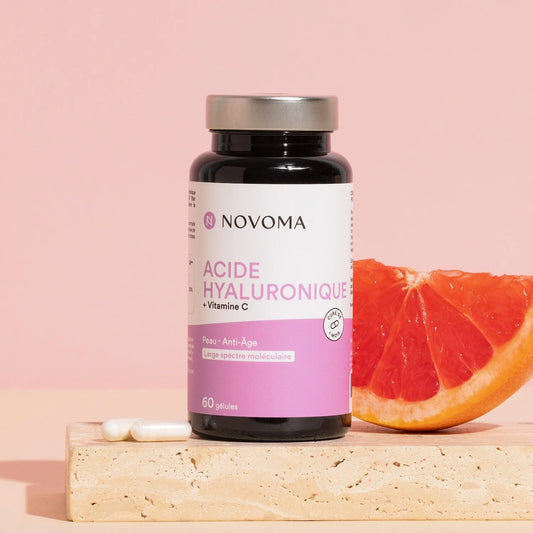
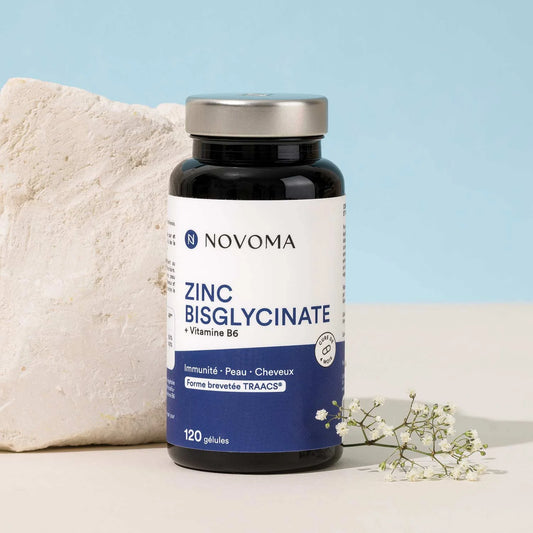
To complement these routines, why not consider a zinc cure? This essential mineral promotes healthy skin . This is also why it is found in many treatments dedicated to blemish-prone skin .
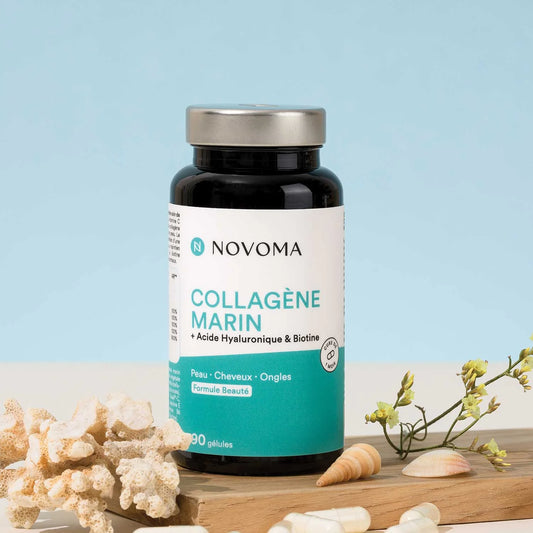
This is also the perfect time to incorporate marine collagen and hyaluronic acid into your routine. These two active ingredients, taken together, promote skin hydration and firmness, while reducing imperfections and supporting skin elasticity.
Acting both internally and externally is what blemished skin needs.

Stress and fatigue: enemies of your blemish-prone skin
“Why does stress give me pimples?” 🤔
Because it raises the level of cortisol — the stress hormone — which in turn stimulates the activity of the sebaceous glands and promotes the appearance of shine or spots.
A growing body of research shows that stress can disrupt the gut microbiome, which could worsen skin problems like acne.
Stress can show on your skin... so to calm your mind AND your blemishes, put on your sneakers for a walk in nature, roll out your yoga mat or take a few minutes to breathe deeply. Your skin will thank you.
Also, don't forget the importance of sleep: try to get at least 8 hours of sleep to allow your skin to regenerate naturally.
Conclusion
Blemish-prone skin can sometimes seem unpredictable, even daunting. But by understanding its true needs—balancing your diet, choosing the right active ingredients, or following a suitable routine—you can really improve its appearance and make way for clearer, more soothed skin.👌🏼