Food Pyramid: The Visual Guide to Creating Balanced Meals
 Camille VALLOIS
Published on
9 min
Camille VALLOIS
Published on
9 min
Summary
The food pyramid is a practical and intuitive visual guide for organizing balanced meals. Each level also specifies the frequency of food consumption and their nutritional impacts, for a successful dietary rebalancing.
What is the food pyramid?
The food pyramid is an educational tool that helps visualize and achieve a balanced diet on a daily basis. Accessible to the general public, it does not require in-depth knowledge of nutrition. Its interactive visuals make the basics of nutrition and food classification easy to understand.
Its tiered structure classifies different food families according to their importance for maintaining good dietary hygiene . These guidelines are based on ANSES advice and epidemiological data on diet-related chronic diseases. The National Nutrition and Health Program (PNNS) disseminates these recommendations as a prevention tool for the well-being of the population at all ages.
Different versions exist depending on lifestyles and cultural contexts: the Mediterranean food pyramid, the vegetarian one, or the visual for children which was updated in 2025. This universal support facilitates the adoption of healthy eating habits on a daily basis.
How to read the food pyramid correctly?
The food pyramid is read from bottom to top, and each step represents the importance and proportion of foods. At its widest base, we find essential foods like water 💧, fruits 🍎, and vegetables 🥦. And at the top, we find ultra-processed, sugary, and fatty foods that are to be consumed occasionally.
The food pyramid is not just a simple ranking; it reflects the frequency ⏳, proportion ⚖️, and quality of foods. It reminds us that each nutritional intake is essential for maintaining a balanced diet and has an interesting preventative power for learning to eat well.

The different levels of the food pyramid and their role
Water and hydration 💧
-
Role: Essential for life, it regulates body temperature, promotes the transport of nutrients and the elimination of waste.
Preferably: water, herbal teas, infusions and low-sugar drinks, avoid sodas and industrial fruit juices.
Fruits and vegetables 🥦🍎
Role: Rich in fiber, vitamins (A, C, E), minerals and antioxidants.
Food: apples, pears, carrots, broccoli, spinach, tomatoes, all vegetables according to the seasons and preferably organic.
Cereals and starches 🍞🍚
Role: Main sources of energy thanks to complex carbohydrates. They provide sustained energy and reduce cravings.
Foods: Whole-wheat bread, semi-whole-wheat pasta, brown rice, potatoes, sweet potatoes, quinoa, lentils. Choose whole grains, which are not often listed in the food pyramid.
Sources of protein 🍗🐟🥚🌱
-
Role: Essential for tissue growth, repair, and maintenance. Proteins also contribute to muscle development and cell renewal.
Foods: Lean meats, fish, eggs, legumes, tofu, chickpeas. They can be of animal or plant origin, provided that the doses are chosen carefully and proportioned.
Dairy products or equivalents 🥛🧀
Role: As sources of calcium and vitamins D and B12, they help strengthen bones and teeth. Located at the center of the food pyramid, they promote bone growth and preservation. The amount of calcium is adapted according to the profile of the person (child, elderly person, etc.).
Food: milk, yogurts, cheeses, calcium-enriched vegetable drinks.
Fats 🥑🫒
-
Role: Provide essential fatty acids such as omega 3 and 6, as well as fat-soluble vitamins (A, D, E, K). They help maintain the proper functioning of the heart and brain in order to preserve memory.
Foods: vegetable oils (olive, rapeseed, walnut), avocado, oilseeds (almonds, walnuts, hazelnuts, etc.).
Sweet 🍫🍩 and salty 🍔🥨 industrial products
Role: A quick source of energy, but low in essential nutrients . A unique taste pleasure to be limited to avoid excess weight and other vascular conditions. Favor natural sugars like honey and encourage homemade recipes.
Food: candy, cakes, sodas, pastries, confectionery, Viennese pastries, cold cuts.
Adapting the pyramid to your lifestyle
The food pyramid is not fixed; it must be adapted according to the age, lifestyle and specific needs of each individual.
For athletes 🏃♂️, portions of cereals and starchy foods can be increased to provide the energy needed for exercise, while ensuring a good intake of protein for muscle recovery and calcium for bone strength.
Vegetarians 🌱 can favor plant-based proteins (legumes, tofu, oilseeds) and calcium-enriched equivalents to compensate for the absence of meat or fish. Food complexes can be added to the nutritional routine, such as vitamin B12 .
For children 👶, the food pyramid includes increased calcium and protein requirements. Since 2025, it has included a section on physical activity and play, which are conducive to healthy child development.
Seniors 👵should adjust their portions by reducing the intake of processed fats and ensuring sufficient protein, calcium and fiber intake.
We recommend you

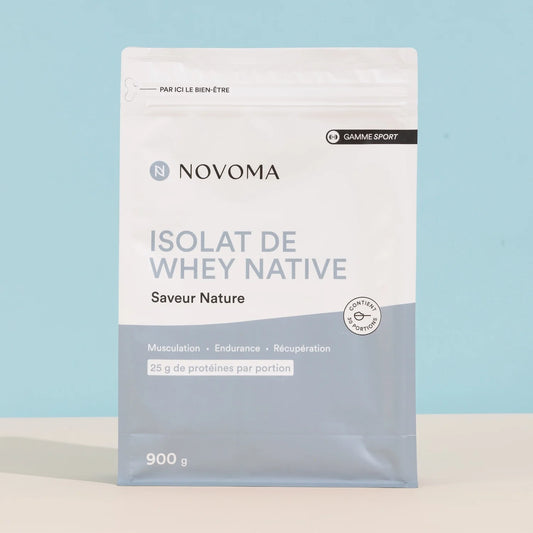
Native Whey Isolate
Formula enriched with digestive enzymes for easier digestion.
- ✅ Undenatured native protein
- ✅ Milk from French pasture cows
- ✅ High in protein and BCAAs
- ✅ Compliant with anti-doping standards
Food pyramid and food rebalancing
The food pyramid is a simple, visual tool that can serve as a foundation for effective dietary rebalancing . By following its guidelines, you will learn to:
vary your diet,
adjust the portions according to your profile,
adopt good sustainable eating habits.
👉 Discover how to integrate the food pyramid into your dietary rebalancing .
To go further, it is strongly recommended to adapt the pyramid's advice for each meal. For example, in the morning, a varied and balanced breakfast promotes energy and concentration. Here are some ideas for balanced breakfasts to start the day off right.
Example of a typical day with the food pyramid
-
Breakfast 🌞 : start the day with whole grains , a piece of fruit , a portion of cottage cheese and a low-sugar drink.
Lunch 🥗 : Make your plate with whole-grain starches like sweet potatoes, seasonal vegetables , a source of protein (meat, fish, or legumes), and finish with a piece of fruit . You can add a portion of cheese and a slice of whole-wheat bread. Dahl and bowls are perfect options for meeting the recommended intakes in the food pyramid.
-
Snack 🍏 : Opt for a piece of fruit , a yogurt , and a handful of nuts to stay focused and avoid cravings. Simple homemade recipes with low-glycemic index foods will be great for those with a strong appetite🐺.
Dinner 🌙: choose soup or vegetables , a little starch and if necessary, a dairy product to supplement your intake (if this was not done at lunchtime), the same goes for the protein source.
Limitations and criticisms of the food pyramid
The food pyramid offers standardized recommendations, but it does not take into account cultural, social, or economic differences, or specific diets such as vegetarianism, or certain medical conditions. It can give the impression that there is a single "right" way to eat, when habits vary from person to person.
The model remains informative and intuitive, but it may neglect essential aspects such as:
the quality of foods within the same group (e.g., refined pasta 🍝 versus whole-wheat pasta),
types of fat (good and bad),
refined and added sugars.
It is also advisable to distinguish between animal and vegetable proteins, source your meat carefully and compensate with sufficient doses for vegetable versions.
The food pyramid is a good foundation, but it must be supplemented with individualized criteria. Support from a professional (doctor or dietitian) can help adapt it to your profile and specific needs.

Practical tips for applying the pyramid in everyday life
Involving the whole family 👨👩👧👦 in menu planning helps to diversify foods and make meals more convivial.
Favoring fresh and seasonal products 🍎🥦 , choosing fruits, vegetables and other raw or minimally processed foods allows you to benefit from a maximum of nutrients and limit additives or hidden sugars.
Limit processed foods 🍔🍫 such as industrial, sugary foods rich in saturated fats.
The impact of consumption such as intensive livestock farming and cultivation, favoring small producers and seasonal plants.
Meal planning 🗓️ Spread your intake over 3 main meals and 1 to 2 balanced snacks if necessary.
The food pyramid remains a valuable foundation for understanding nutritional balance, but it must be adapted to each lifestyle. Beyond a one-size-fits-all model, it's a flexible guide that can be personalized based on age, activity, habits, and dietary preferences. When used properly, it becomes a true ally for adopting healthy eating habits and maintaining overall well-being.