Sunshine Vitamin: How Long Should You Expose Yourself to It Fully?

Summary
Also known as the “sunshine vitamin,” vitamin D is a discreet but essential star of our overall well-being. Its production depends directly on the skin's exposure to sunlight. No magic here, but a simple biochemical process! Our skin cells transform into little vitamin D factories when they encounter UVB rays. But how long do you need to expose yourself to the sunshine vitamin to really benefit from it?
We've deciphered the topic for you: here's everything you need to know about the sunshine vitamin, how to benefit from it, and how to ensure you're getting the right dose for your body. 🌞
What is the “sunshine vitamin”?
Before going into detail about ideal exposure times, a reminder is necessary to understand the role of the sunshine vitamin.
Definition: What is vitamin D or the sunshine vitamin?
Vitamin D is not a vitamin in the classic sense, but rather a prohormone. When the skin is exposed to UVB rays (or ultraviolet B rays, especially active between 11 a.m. and 3 p.m.), a molecule present in the epidermis, 7-dehydrocholesterol, transforms into previtamin D3, then into active vitamin D3 after conversions in the liver and kidneys. In other words: your forearms in the sun become biochemical laboratories.
🔍 Unlike vitamins C or B, which must be obtained through food, vitamin D is largely synthesized by the body itself . Hence its nickname " sunshine vitamin" . Synthesis is not immediate, which is why rapid sunbathing in the early morning or late afternoon has almost no effect on this production!
What are the forms of vitamin D?
There are two main forms of vitamin D : vitamin D2 (ergocalciferol, from plants and fungi) and D3 (cholecalciferol, produced by the skin and found in some animal products) . D3 is considered the most effective, as it is better recognized and used by the body. Among the few foods capable of providing it naturally:
oily fish (salmon, mackerel, herring, sardines);
egg yolk;
certain mushrooms (shiitake, maitake, themselves exposed to UV);
Cod liver, an icon in our grandmothers' cupboards, a real nutritional bomb.
💡Even a diet rich in vitamin D3 only covers 10 to 20% of vitamin D needs! Sun exposure therefore remains the main source for covering vitamin D needs.
Can the body store vitamin D3?
Once produced or ingested, vitamin D is fat-soluble . It is therefore stored in the liver and fatty tissues. This small reserve works like a battery: it allows you to last a few weeks without sun. But no amount of sunbathing marathons in July will "charge" you for the entire winter!
👉Indeed, the storage life of vitamin D is limited, hence the importance of regularly renewing its intake, especially from autumn. Note: overweight people may have vitamin D "captured" in their fat, less available to the body, which explains why they are more often deficient despite correct exposure!

What are the benefits of vitamin D or the sunshine vitamin?
There's a reason why the sunshine vitamin , or vitamin D, is so often cited in diets. Its roles extend far beyond simple bone function.
🦴It contributes to the maintenance of normal bones: without vitamin D, there is no good absorption of calcium and phosphorus, two minerals essential for strong bones and teeth! This is why severe deficiencies can lead to rickets (stunted growth) in children and osteoporosis or osteomalacia in adults. The skeleton deprived of vitamin D resembles a fragile architecture ready to crack at the slightest shock!
💪 It ensures normal muscle function: several studies show a link between vitamin D and muscle strength. People lacking vitamin D experience a tendency to cramp, as well as diffuse pain, or even chronic muscle fatigue. In athletes, a correct level of vitamin D improves recovery and limits the risk of injury . In seniors, it reduces falls linked to muscle weakness. In short, from the young marathon runner to the grandmother who dreams of dancing at her granddaughter's wedding, vitamin D makes all the difference!
🏋️ It contributes to the proper functioning of the immune system and to phosphocalcic metabolism: if you are one of those people who get sick at the first drop in temperature, perhaps take a look at your vitamin D levels! Several studies have shown that it modulates the activity of immune cells and reduces the frequency of respiratory illnesses, particularly in winter.
🥛 It affects the phosphocalcic balance: without it, calcium passes straight into the intestine without ever reaching the bones. A picture speaks louder than words: imagine having a bank account, without a card to withdraw money. Average! 🙄
🧬 It plays an essential role in cell division: it acts behind the scenes in tissue renewal, a permanent process that ensures growth, repair and defense.
Chronic vitamin D deficiency not only weakens bones, but also affects immunity, muscle tone and metabolism.
How does the body produce vitamin D through exposure to sunlight?
To know how long to expose yourself to light to benefit from the sunshine vitamin , let's start by deciphering the production process.
Synthesis mechanism via UV B (approximately 11 a.m.–3 p.m.)
Vitamin D is mainly produced by UVB rays, which are present in significant quantities when the sun is high in the sky, typically between 11 a.m. and 3 p.m. Specifically, UVB photons hit the 7-dehydrocholesterol in the skin, which transforms into previtamin D3 . The latter undergoes a sort of internal cooking to become vitamin D3. Then, it goes to the liver and then the kidneys to transform it into its active form, calcitriol! Without these three steps, there is no result. Hence the importance of direct exposure (and not filtered by a window pane, which blocks almost all UVB rays) .
Focus on factors influencing production: season, latitude, pollution, age, etc.
Vitamin D production can vary greatly depending on several parameters:
➡️ The season : in winter, in our latitudes, the angle of the sun means that UVB rays hardly reach the skin. In other words, you can tan your nose on a Parisian terrace in December, but you will hardly produce any vitamin D (if you have a choice, come and tan next to our premises, it will always be more pleasant!) . 😉
➡️ Latitude : the further you are from the equator, the more synthesis is compromised, especially between November and March.
➡️ Skin type : Light skin produces vitamin D quickly, sometimes within 10 minutes. Dark skin, rich in melanin, needs more time, sometimes up to 2 to 3 hours.
➡️ Pollution and clouds : They filter UVB rays. Residents of smog-choked megacities (hello Beijing or Mexico City) produce much less of it.
➡️ Clothing : no need to hide your face (and your whole body): jeans and a sweater limit the exposed surface, whereas a tank top in spring can make the difference!
➡️ Sunscreen : SPF 30 blocks 97% of UVB rays. In short: when protected, the skin tans less quickly... but also produces less vitamin D.
➡️ Age : after 65, the skin synthesizes about half as much vitamin D as at 20.
What is the link between UV index and vitamin D synthesis?
The UV index, often displayed in weather reports, is an excellent indicator! The summary is significant when the UV index is above 3. Below that, you can enjoy the sun for the atmosphere… but not for the vitamin D.😅
Example: In Paris in January, the UV index is often 1 or 2. Translation: zero production, even if you sit on a terrace for an hour. On the other hand, in Marrakech at the same time, the UV index climbs to 4 or 5, enough to restart the machine!

What is the optimal duration of exposure to cover vitamin D needs?
It's the question on everyone's lips: how long should you stay outside to benefit from the sunshine vitamin ?
Summer exposure: 10 to 20 min, 2 to 3 times per week
In summer, in our latitudes , it is enough to expose arms and legs for 10 to 20 minutes, two or three times a week, without sunscreen. But there is no need to aim for a full tan, because 20 to 25% of the exposed body surface (arms and legs, or face and forearms) is enough. A lunch break in the park, with short sleeves, will do the trick! This advice obviously applies to adults, avoiding baking at 4 p.m. in the middle of a heatwave. 🫣
In winter in sunny areas like Spain: more than 2 hours may be necessary
In southern Spain or Morocco, it is possible to produce vitamin D even in winter, but it takes longer. On average, more than two hours of exposure are necessary for light skin, and more for dark skin. This is why Mediterranean populations remain less deficient than Nordic populations, even in January!
A variable time depending on your phototype: 10 to 15 min for light skin, up to 3 hours for dark skin!
Melanin acts as a natural shield. Good news: it protects against sunburn. Bad news: it inhibits vitamin D production… (you can't have everything, can you?) . Very fair skin only needs 10 to 15 minutes, while dark skin can need 1 to 3 hours to achieve the same result. This is essential information for people of African or Indian descent living in areas with little sunlight: they are at increased risk of vitamin D deficiency!
Beware of excessive sun exposure to avoid skin risks : seeking vitamin D should not become an excuse for sunburn. The UV index is there to guide you: above 8, it is better to reduce your exposure time or protect your skin. Because while vitamin D protects against many things, it does not eliminate the risk of melanoma!
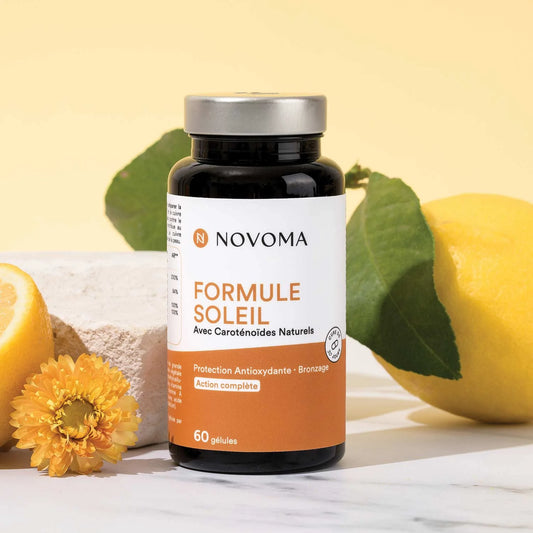
✔️Our advice: prepare your skin before exposure by opting for the Novoma Sun Formula which includes carotenoids, vitamin E, vitamin A and copper.
We recommend you

Sun Formula
Synergy of 7 active ingredients to prepare and support your skin in the sun.
- ✅ Sublimated tan
- ✅ With natural carotenoids
- ✅ 100% clean (guaranteed additive-free & colorant-free)
- ✅ 1 month treatment
The limits of the “sunshine vitamin” in autumn and winter
It is impossible to store “ vitamin sunshine ” for 6 months! And this is for several reasons:
👉 Natural synthesis is lower in winter : between seasons, high latitudes, clouds and pollution: in French latitudes, from October to March, UVB rays are too weak. Add the fog in Lyon, the clouds in Lille or the pollution in Paris and production becomes almost zero.
👉 Indoor lifestyles, clothing, and climates with little sunshine limit synthesis: working in open spaces, dressing warmly, spending weekends indoors... Our urban and confined life drastically reduces the possibility of producing the precious vitamin. The modern lifestyle therefore has its share of responsibility for the massive deficiencies observed in the population (1 in 4 French people are deficient according to Public Health France).
💡 Good to know: there's no such thing as an overdose of vitamin D from the sun. The body self-regulates and stops production when its needs are met. In other words: tanning for 3 hours doesn't provide more vitamin D than 20 minutes of exposure. The only thing you'll get is sunburn!
How to boost your vitamin D intake
The main source of sunshine vitamin comes from exposure to light. When it's lacking, cooking takes over!
Focus on foods that are a source of vitamin D
Some of the best food sources of vitamin D include:
oily fish (salmon, mackerel, sardines, herring);
cod liver and cod liver oil;
egg yolk;
mushrooms (especially shiitakes exposed to UV rays);
dairy products fortified with vitamin D.
Take a vitamin D supplement
A vegetarian who doesn't eat fish, eggs, or fortified foods will definitely need supplements. Similarly, people in Northern Europe routinely take dietary supplements or supplements in winter because their sun-synthesis is insufficient! Here's why taking vitamin D in winter is more than relevant!
Also read: What is the best vitamin D3 ?
We recommend you

Vitamin D3
100% natural and bioavailable vitamin D3: cholecalciferol. Each dose provides 2000 IU of vitamin D3V®.
- ✅ Vitamin D3 of algal origin
- ✅ Micro-encapsulated form for maximum absorption
- ✅ Optimal dosage (2000 IU / 2 capsules)
- ✅ 2 to 4 months of treatment
When to consider vitamin D supplementation?
In some cases, a vitamin D supplement may become very relevant:
people with dark skin living in countries with little sunlight;
seniors;
city dwellers who rarely go out;
inhabitants of high latitudes.
After consulting a doctor, general recommendations for vitamin D supplementation are 600 IU (15 µg) per day for adults, as recommended by ANSES. Elderly or high-risk individuals will be recommended an intake of 800–2,000 IU per day to compensate for reduced skin synthesis and increased needs.
The risk of overdose only exists with supplements taken in excess, which can cause headaches or weight loss, hence the importance of checking the daily dose of vitamin D adapted to your needs !
The "sunshine vitamin" is a major key to our bone, muscular, immune, and cellular well-being. A few minutes of well-measured sun exposure is enough in summer, but from autumn onwards, you'll need to stock up on vitamin D through diet or even supplementation. In short: forget marathon sunbathing, focus on regularity, and adapt your exposure to your skin!