Sleep apnea: understanding, preventing and taking natural action

Summary
Do you sleep eight hours, but wake up exhausted? Does your partner tell you that you snore loudly or that your breathing sometimes stops during the night? These signs may indicate sleep apnea , a nocturnal breathing disorder that affects 5 to 10% of adults in France , according to the High Authority for Health.
Behind these silent pauses, the body lacks oxygen and sleep loses all its restorative power. Little by little, fatigue sets in, concentration decreases, and mood suffers.
While medical treatments exist, it is also possible to take action on a daily basis: on eating habits, stress or environment, to regain more peaceful nights and minimize the impact of sleep apnea during the day.
What is sleep apnea?
Sleep apnea, or obstructive sleep apnea syndrome (OSAS) , is characterized by repeated pauses in breathing during sleep. These interruptions, often unconscious, last a few seconds and can occur dozens of times per hour. With each pause, the body reacts: the brain restarts breathing, sometimes with a slight jerk. Sleep is then fragmented, and recovery is incomplete.
There are three main forms of sleep apnea:
Obstructive sleep apnea , the most common type: the airways narrow or close temporarily, preventing air from flowing.
-
Central sleep apnea , which is rarer: here, it is the brain that no longer sends the correct respiratory signal, without mechanical obstruction.
Mixed apnea , a combination of the two previous ones, where a physical obstacle is added to a defect in nervous control.
Signs and consequences of sleep apnea
One of the first signs of sleep apnea is often irregular snoring , sometimes punctuated by breathing pauses that can be noticed by the partner. These repeated pauses disrupt the sleep cycle and lead to persistent fatigue , even after several hours in bed.
Upon waking, the sensation is deceptive: one has slept "for a long time," but without real rest. Many describe an overall lack of energy, a more fragile mood, or difficulty staying focused during the day.
In the long term, these disrupted nights can impair quality of life : decreased alertness while driving, work difficulties, irritability, or loss of motivation. Repeated oxygen deprivation during the night also puts strain on the heart and blood vessels, which explains why those affected sometimes experience cardiovascular health imbalances .

Causes and risk factors of sleep apnea
Sleep apnea often has multiple underlying causes, ranging from physical predispositions to lifestyle.
Among the most frequent causes:
Being overweight puts pressure on the neck and makes airflow more difficult when lying down. Approximately 70% of people with sleep apnea are overweight.
With age , the phenomenon becomes more frequent: nearly a third of those over 65 are said to experience episodes of sleep apnea.
-
Sex , because men are more often affected, although women can also be affected, especially after menopause.
Morphology , sometimes simply unfavorable: a short chin, a receding jaw, a space behind the tongue or narrow nasal passages can play a role.
Family history plays a role , since facial features or airway structure are often passed down from one generation to the next.
-
Certain lifestyle habits , such as drinking alcohol in the evening, smoking, or eating overly heavy dinners, accentuate muscle relaxation.
More rarely, children can also be affected, particularly in cases of overweight or large tonsils that interfere with breathing during the night.

We recommend

Sleep Formula
100% natural formula based on plants selected for their targeted action on sleep.
- ✅ Synergy of 5 plants rich in active ingredients
- ✅ Effective from the first use
- ✅ No habituation or addiction
- ✅ 45-day treatment
How is sleep apnea diagnosed?
Sleep apnea often goes unnoticed: breathing pauses occur during the night without the person realizing it. Most often, it is the partner who notices the irregular snoring or nighttime awakenings .
The first step is to talk to a healthcare professional , who will assess signs of fatigue, drowsiness, or risk factors such as being overweight or using alcohol.
Several tests exist to confirm the diagnosis:
Polysomnography , performed in a sleep center, records breathing, heart rate and oxygenation during the night.
-
Respiratory polygraphy , a simpler procedure, can be done at home. It's a bit of a hassle: a few sensors, a control unit, wires to attach before going to sleep… Admittedly, it's not the most glamorous nighttime accessory, but it allows sleep to be observed in much more natural conditions than in a hospital.
Before a consultation, some people use self-assessment questionnaires such as the Epworth Sleepiness Scale . This test provides an initial indication of daytime fatigue levels, but several studies have shown it to be unreliable for accurately detecting sleep apnea. It is therefore primarily used to initiate a more comprehensive assessment.
Conventional treatments and limitations
CPAP, a medical reference
Continuous positive airway pressure (CPAP) remains the most effective treatment. The device delivers a gentle flow of air through a mask to keep the airways open.
Its effectiveness is undeniable, but wearing a mask remains a nuisance: noise, discomfort, dryness… Many struggle to tolerate it every night. 😟
Good to know: prescribed by a doctor, this device is covered by health insurance.
Dental orthotics
Mandibular advancement devices hold the jaw slightly forward to facilitate airflow. Easier to wear, they are particularly suitable for mild to moderate forms of sleep apnea. The only drawback: some jaw tension may occur initially.
Surgery
Less common, it aims to correct an anatomical anomaly (enlarged tonsils, deviated nasal septum, etc.). The results vary depending on the case.
These devices act on breathing, but not on the underlying causes: weight, stress, chronic fatigue, sleep quality. Hence the importance of a comprehensive approach , combining medical monitoring and natural lifestyle adjustments .
OSA: Natural solutions and healthy lifestyle
Adjusting your lifestyle is all well and good, but how do you actually do it? Among the most effective strategies are:
1️⃣ Rebalancing your weight : Even a 5 to 10% weight loss can reduce pressure on the upper respiratory tract. Consulting a nutritionist or naturopath can help identify hormonal or digestive imbalances that are hindering weight loss, sometimes linked to chronic stress or poor sleep.
2️⃣ Move every day , without necessarily seeking performance: walk after dinner, yoga, swimming, Pilates… These activities maintain muscle tone, including that of the respiratory tract, and facilitate relaxation of the body in the evening.
3️⃣ Regulating the nervous system and stress: Chronic stress increases muscle tension in the respiratory tract and disrupts the regulation of the circadian rhythm via cortisol, the stress hormone. Techniques such as heart coherence, abdominal breathing, or guided meditation help restore the balance between the sympathetic (awakening) and parasympathetic (relaxation) nervous systems.
The role of dietary supplements in sleep apnea
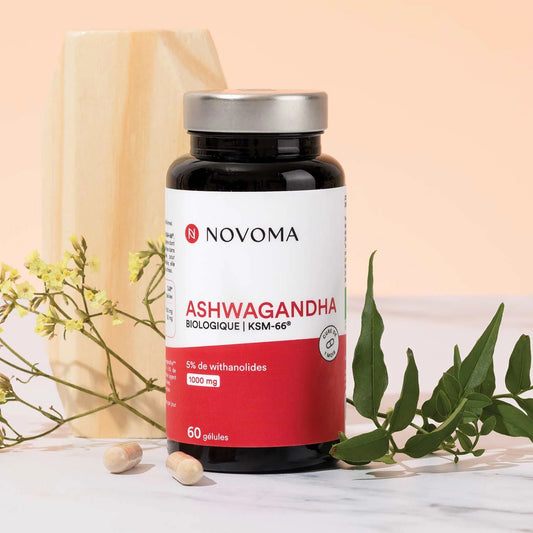
Dietary supplements for sleep can support the regulation of the sleep-wake cycle, which is often disrupted in people prone to apnea.
We have prepared a short summary table to help you better understand their specific purpose and complementary actions:
Complement |
Relevance in the context of sleep apnea |
Recognized assets and shares |
Helps to restore a regular sleep-wake cycle, to fall asleep more easily and to enjoy deeper sleep. |
- Melatonin : helps reduce the time it takes to fall asleep. - Passionflower, lemon balm, hops and California poppy : a concentrate of soothing plants to naturally support relaxation and sleep quality. - Vitamins B6 and B3 : contribute to the normal functioning of the nervous system. |
|
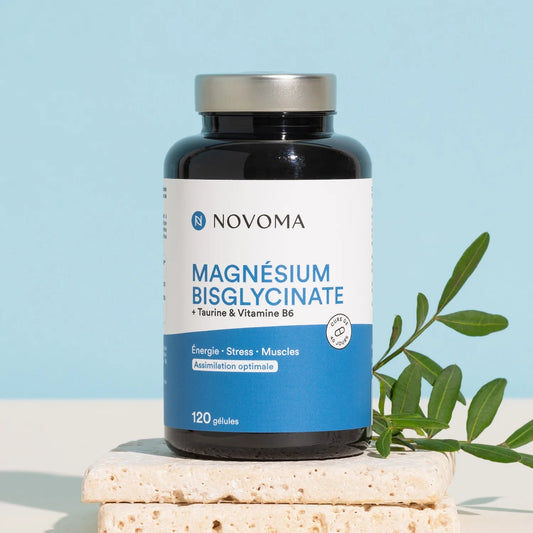
| Helps reduce fatigue often felt after poor nights of sleep, contributes to the reduction of fatigue and normal energy metabolism. |
- Highly bioavailable magnesium bisglycinate : helps reduce fatigue and contributes to the normal functioning of the nervous system. Ideal for supporting body relaxation at the end of the day. |
Do sleep supplements really work?
At Novoma , we prefer to let our clients (and their nights) speak for themselves. 🙂
What evening routine will ensure restful sleep?
-
Relaxing infusion : a herbal tea with soothing plants (lemon balm, linden, verbena, passionflower, etc.) helps you relax. Drink it two hours before bedtime to avoid waking up during the night due to the urge to use the bathroom.
-
Digital disconnection : try an app like AppBlock to limit access to networks (your Instagram feed will survive, we promise… and you’ll sleep better) or switch your phone to black and white : scrolling instantly less tempting!
-
Subdued atmosphere : opt for warm, low lighting , a diffusion of relaxing essential oils (true lavender, petitgrain bigarade) or a few fake candles.
Muscle relaxation : the Jacobson method is ideal. It consists of contracting and then relaxing each muscle group to relax the whole body before sleep.