Stress pimple on the face: causes and solutions

Summary
Do you notice pimples appearing on your face just before an important exam or during a stressful period at work? It's no coincidence! When we're under pressure, our entire body becomes unbalanced... and our skin suffers the consequences. The result: blemishes that appear overnight.
So why does stress promote the appearance of pimples ? How can you recognize these imperfections and, more importantly, how can you limit them naturally? In this article, we take a look at the famous stress pimple on the face: its causes, its characteristic signs, and our best solutions for quickly regaining more serene skin.
The link between stress and pimples
Before talking about treatments or solutions, let's explore how stress actually affects our skin and triggers the appearance of spots.
The role of cortisol, the stress hormone
When we experience a period of intense or chronic stress, our bodies release more cortisol. This stress hormone disrupts the natural balance of our skin through several mechanisms:
📌Overproduction of sebum🛢️ : Cortisol directly stimulates the sebaceous glands, which then produce much more sebum than necessary. The result? The skin becomes oily and the pores become clogged, the ideal environment for the appearance of pimples.
📌A weakened skin barrier 🧱 : the skin functions like a protective wall made of cells (the bricks) and natural lipids (the cement). Cortisol damages this natural "cement", creating microscopic cracks that let bacteria in and moisture out.
📌Dehydration💧 : Because cortisol prevents the skin from retaining water properly, it becomes dehydrated. Faced with this dryness, the skin panics and produces even more sebum to compensate.
The skin microbiota becomes unbalanced
Our skin naturally hosts billions of microorganisms that form the skin microbiota, a true protective shield. Stress disrupts the balance of these beneficial microorganisms.
When these natural "safety agents" are weakened, blemish-causing bacteria quietly settle into pores already clogged with excess sebum. This is how stress pimples multiply on your face.
The vicious circle of skin stress
Stress → Cortisol → Excess sebum → Weakened barrier → Reactive state → Weakened defenses → Pimples → More stress!
This vicious circle explains why stress spots are often more persistent than classic blemishes: they are part of an overall imbalance in the body that is self-perpetuating.

What are the signs of a stress pimple?
Wondering how to tell the difference between a stress pimple and a regular blemish? There are several clues that can help you spot them. 🕵️
Revealing areas on the face
Stress-related pimples have very specific predilection areas :
The front
The jaw
The chin
These areas, rich in sebaceous glands and particularly sensitive to hormonal variations , react quickly when cortisol surges. This is why they are the first to be affected during stress peaks.
Timing that doesn't lie
Unlike classic blemishes, which develop gradually, these spots appear suddenly, often overnight. This sudden eruption generally coincides with periods of tension : an important job interview or exams approaching, relationship conflicts, work overload, etc.
Lack of sleep or prolonged fatigue also amplify this phenomenon, as they further disrupt hormonal balance.
Recognizable characteristics
Stress pimples on the face have distinctive features : they are usually red, inflamed, and tender to the touch. They tend to be larger than normal blemishes and may be accompanied by a painful sensation.
When nothing has changed in your habits (diet, normal hormonal cycle) but your skin still reacts, stress becomes the number 1 suspect. 🎯
Moreover, these imperfections rarely occur alone. They are often accompanied by other manifestations of stress:
Tension in the shoulders and neck;
Restless nights;
Irritability;
Feeling down.
Other reactions may also appear on the skin:
Unusual dryness and tenderness;
Diffuse redness;
Feelings of tightness or discomfort.
All of these signs indicate that your body is out of balance when faced with stress.
🔗 To go further: Heat rash: how to recognize them?
How to limit the appearance of stress-related pimples?
It's entirely possible to reduce the impact of stress on your skin. This requires a comprehensive approach that addresses both the causes and the signs.
Improve your lifestyle
A balanced lifestyle helps the body better manage hormonal fluctuations. Here are some key habits to implement:
Get enough sleep : Restful sleep helps regulate hormones and reduces excess cortisol production. Try to maintain a regular sleep schedule and get between 7 and 9 hours of sleep per night. Your skin also benefits from this nighttime rest to regenerate and repair damage from the day.
-
Avoid blood sugar spikes : Fast-acting sugars can increase reactive states and stimulate sebum production. Choose whole foods that are rich in fiber and have a low glycemic index.
Move regularly : practicing gentle physical activity (yoga, brisk walking, swimming) helps release accumulated tension and stimulates the production of endorphins, the feel-good hormones that naturally counterbalance the effects of cortisol.
These good habits reduce the risk of stress spots appearing on your face, while improving your overall well-being.
Learn to manage your stress
Easier said than done, right? 😉 However, incorporating relaxation techniques into your daily life can really make a difference:
-
Deep breathing and cardiac coherence : a few minutes a day are enough to soothe the nervous system and calm the stress reaction.
Guided meditation or mindfulness : These practices promote letting go and acceptance. By reducing our perception of stress, they help us limit the production of cortisol.
Limit stimulants : Excessive consumption of coffee, refined sugar, or alcohol can worsen nervousness and affect your skin.

Food supplements: valuable support
To support these changes in habits, certain plants and minerals offer valuable support to the body during difficult periods and help limit the appearance of stress spots.
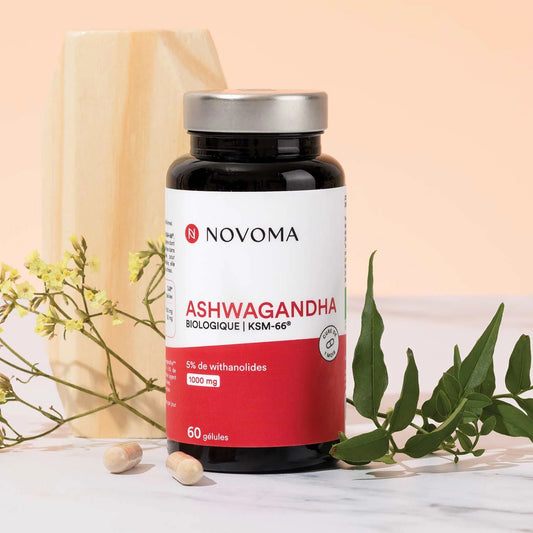
👉 Ashwagandha : This adaptogenic plant, used for thousands of years, promotes the body's resistance to stress . It helps maintain mental balance and emotional stability . Thanks to its antioxidant properties, it also supports the well-being of the skin and the vitality of the body.
At Novoma, we have chosen KSM-66® extract , the world standard for organic ashwagandha. This extract has the most complete spectrum of action and optimal bioavailability, with more than 5% withanolides (the active ingredients of the plant). |
🔗 To go further: Ashwagandha: how long does it take to feel the effects?
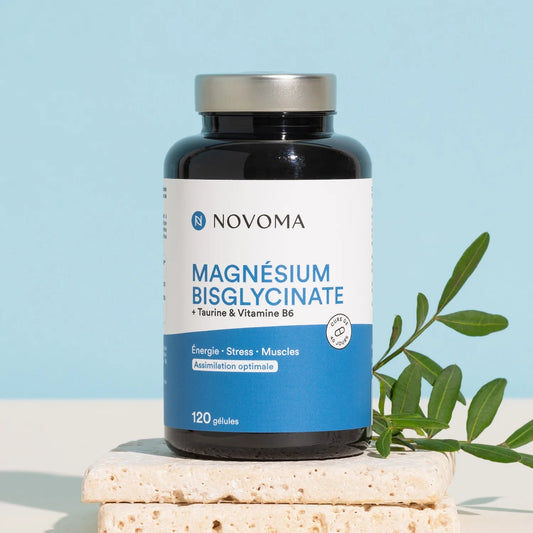
👉 Magnesium Bisglycinate : This essential mineral contributes to the normal functioning of the nervous system and normal psychological functions, while reducing fatigue. It thus helps the body better manage its response to stress.
Our highly bioavailable bisglycinate form is combined with taurine and bioactive vitamin B6 to optimize its absorption and effectiveness. |
🔗 To go further:
These supplements do not replace a healthy lifestyle, but are a valuable natural aid to protect your body and skin during periods of stress.
We recommend you

Magnesium Bisglycinate
Synergistic formula based on 3rd generation magnesium bisglycinate.
- ✅ High absorption magnesium
- ✅ 300 mg of magnesium per dose
- ✅ With Taurine and Vitamin B6
- ✅ Made in France
Skin care for stress pimples on the face
Don't panic if you've already got stress spots! Proper skin care can speed up their disappearance.
Clean gently
We know... The temptation to strip your skin to quickly eliminate imperfections is great, but it's exactly the opposite that you should do! Gentle cleansing preserves the skin barrier already weakened by stress and avoids stimulating sebum production even more.
Therefore, favor:
Gentle formulas, without harsh sulfates, such as micellar waters;
Warm water rather than hot, which can accentuate redness;
Cleanse morning and evening with gentle movements, without rubbing.
Hydrate without clogging
Contrary to popular belief, even skin prone to stress spots needs hydration!
Choose treatments:
✅ Non-comedogenic : Specially formulated to not clog pores.
✅ Moisturizing and balancing : to help the skin regain its balance.
✅ With soothing active ingredients : such as aloe vera or niacinamide which calm the skin's reactivity .
The golden rule: don't touch the buttons
Resisting the urge to pick at stress pimples on your face can take willpower, but it's essential! Picking, squeezing, or picking at pimples only worsens the reactive condition , can cause infections, and can leave lasting marks. 🚫
Find the strength and discipline of the Jedi within yourself ⚔️: let spots heal naturally, applying targeted topical care if necessary. Your skin will thank you.
Stress spots on the face are a sign of inner imbalance. By adopting a balanced lifestyle, learning to manage your stress, and using the right skincare products, you can limit their appearance and restore healthier skin.
And if you're going through a particularly intense period, dietary supplements like ashwagandha or magnesium can provide valuable support. As we often tell you, the secret to beautiful skin often lies in the art of taking care of yourself as a whole! 🌿