Turmeric: what ailments can it naturally support?

💡 Key takeaways:
It contributes to joint and bone health, and helps prevent morning stiffness.
It aids digestion and supports your liver in its daily work.
It helps maintain the effectiveness of the immune system thanks to its antioxidant properties.
It helps maintain healthy skin and contributes to cardiovascular well-being.
It combines perfectly with ginger for optimal benefits for the joints
Summary
This golden powder that colors your curries is more than meets the eye! Behind its unassuming appearance lies a spice used since time immemorial in India and Asia. Today, it's making a comeback, and for good reason: turmeric truly deserves our attention.
You're probably wondering what it can really do for you? We'll explain everything, simply and directly 😊
Turmeric: this root that never ceases to amaze us
Let's get to know this ancient spice
Turmeric (Curcuma longa, for those curious) belongs to the same family as ginger. Grown mainly in India, Indonesia and Sri Lanka, it is its rhizome that is used, this small knobby root that hides a bright orange-yellow flesh.
For over 4000 years, Ayurvedic and Chinese traditions have incorporated it into their daily practices. This is no coincidence: our ancestors had already recognized its potential to promote well-being.
Curcumin: the hidden treasure of turmeric
Do you know what makes turmeric so interesting? Curcumin . This compound makes up only 3 to 5% of the powder, but it's what makes all the difference. Think of it as the star of a band: subtle in volume, but absolutely central to the action.
Curcumin belongs to the curcuminoid family, polyphenols with remarkable antioxidant properties. It's what gives it that characteristic golden hue and acts on so many processes in your body.
We recommend

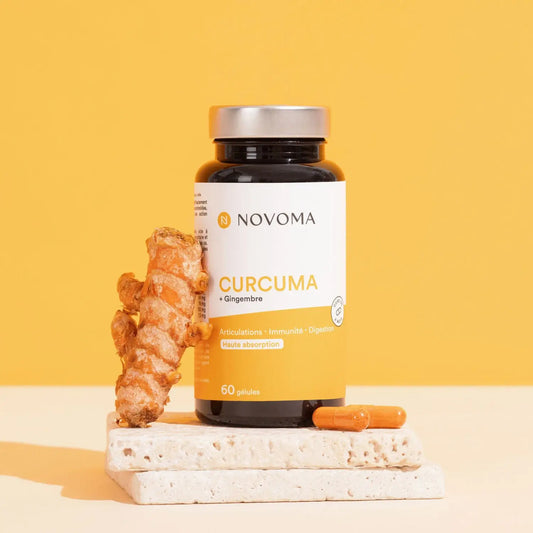
Turmeric
Meriva® patented Turmeric extract, highly bioavailable and concentrated in curcumin
- ✅ Meriva®: the most absorbable form of curcumin
- ✅ High in curcumin
- ✅ Formula with ginger
- ✅ 2-month treatment
When your joints are asking for a little gentleness
Turmeric, a natural ally for your joints and bones
If your knees creak in the morning or your joints ache after a long walk, you're not alone. Over time, through sports activities or simply everyday life, our joints can become sensitive.
Turmeric acts as a true ally in this process. It contributes to joint and bone health , while also helping to modulate the natural processes that create this feeling of stiffness. Curcumin, in particular, acts on certain molecules that contribute to joint discomfort.
Avoid morning stiffness: the turmeric-ginger duo
You know that unpleasant feeling when you wake up, when your joints feel stiff? That morning stiffness that so many people experience after 45... Let's take a look at it together: turmeric, especially combined with ginger , helps to regain flexibility from the start of the day.
Sensitive joints: regaining everyday comfort
For sensitive joints , those discomforts that appear with age or after intense activity, turmeric can truly make a difference. Its antioxidant action helps protect joint structures against oxidative stress.
Oxidative stress (those infamous unstable molecules that accelerate the aging of our cells) plays a role in joint wear and tear. Turmeric neutralizes these aggressors and helps preserve the health of your joints and bones for longer.
Muscle discomfort and sports recovery
Do you play sports regularly? Or perhaps do some intensive gardening on the weekend? We all know the feeling of aches and pains that set in. Turmeric is particularly popular with active people precisely for this reason.
What if we kept it simple? Whether you're a weekend marathon runner or a yoga enthusiast, turmeric aids recovery . It soothes those minor muscle discomforts that can ruin your day and helps keep your joints flexible.

Digestion: when your stomach thanks you
Turmeric aids digestion
Bloating after meals? That lingering feeling of heaviness? Good news: you don't have to live with it. Turmeric is officially recognized for its digestive benefits. The WHO itself endorses its use for digestive issues involving acidity and flatulence.
In practical terms, turmeric stimulates bile production by your liver. And bile is a bit like the natural detergent of your digestive system: it emulsifies fats and facilitates their digestion. The result? Restored intestinal comfort, especially after rich meals.
Your liver deserves your full attention.
We don't often think about our liver , and yet! It works behind the scenes 24/7 to filter, detoxify, and transform. Turmeric supports these essential liver functions. Think of it as a boost for your liver, which is sometimes overwhelmed by the workload.
It also acts on the gallbladder, facilitating bile secretion and thus preventing certain digestive discomforts. Your liver will thank you silently, but you will feel it in your daily energy.
Bloating and other discomforts
That bloated stomach after meals, that gas that makes you feel uncomfortable... Not very glamorous, but terribly common! The carminative properties of turmeric (which means it helps to expel gas ) can really change your daily life.
For those who experience occasional intestinal discomfort, turmeric creates a more peaceful digestive environment. It soothes, calms, and gently rebalances. Turmeric truly promotes harmonious digestion.
Maintain the effectiveness of your immune system
Antioxidants: your invisible shield
Spoiler alert: your body is subjected to invisible attacks every day. Pollution, stress, UV rays, an unbalanced diet... All of this generates free radicals, unstable molecules that gradually damage your cells.
Turmeric has a powerful antioxidant effect. Curcumin captures these free radicals before they can cause damage, much like a goalkeeper stopping shots. This daily protection, invisible but very real, helps preserve your vitality in the long term.
Support your natural defenses
Your immune system is your personal army against external aggressors. Especially during winter or seasonal changes, it needs support. You don't need to be an expert to understand: a well-functioning immune system means fewer days of feeling vulnerable.
Turmeric helps maintain the effectiveness of the immune system. It supports your natural defenses and helps your body better cope with daily challenges. It all depends on your needs, but a well-planned course in the fall can make all the difference ✨
Beyond the joints: other surprising benefits
Cholesterol and cardiovascular well-being
We often talk about LDL cholesterol, the so-called "bad" cholesterol. Turmeric helps maintain a healthy balance of blood lipids. It also helps your blood vessels retain their elasticity, which promotes good circulation.
The verdict? In a holistic approach (balanced diet, regular exercise, stress management), turmeric naturally finds its place. It doesn't do the work alone, but it contributes to the collective effort!
Turmeric helps to maintain healthy skin
For sensitive skin that reacts easily, with redness, turmeric can provide real relief. Turmeric helps keep skin healthy thanks to its natural antibacterial and soothing properties.
In India, a turmeric paste is applied to the face before important occasions – and for good reason! This age-old tradition is based on the recognized beneficial properties of this golden spice to maintain radiant and healthy skin.

Choosing and using your turmeric correctly
Powder, capsules or fresh root?
You have plenty of options:
– The powder can easily be added to your dishes, smoothies or golden lattes;
– The fresh rhizome provides a more intense flavour (to be grated like ginger);
– Capsule supplements guarantee a precise and concentrated dosage.
For targeted action on a specific discomfort, supplements remain the most effective solution. They contain a standardized concentration of curcuminoids, impossible to achieve with simple food powder.
Questions of dosage and duration
It's simpler than it seems 😊 For preventative use, a few hundred milligrams a day is sufficient. To address a specific issue (sensitive joints, digestive problems), the dosage is typically between 500 and 1500 mg of extract per day.
A 2- to 3-month course of treatment is generally the time it takes to feel the benefits, especially on the joints. Afterward, you can take a break or continue depending on how you feel. Listen to your body; it knows what it needs.
Summary table: turmeric at a glance
What it accompanies |
How it works |
For whom in particular |
Joints and bones |
Contributes to their health, prevents morning stiffness |
Sensitive joints, active people, after age 45 |
Digestion |
Promotes digestion, stimulates bile |
Slow digestion, discomfort after meals, bloating |
Liver |
Protects and detoxifies |
After the excesses, a detox cleanse |
| Immune system |
Maintains its effectiveness |
Seasonal changes, periods of vulnerability |
Skin |
Helps keep it healthy |
Sensitive skin, irritations, skin aging |
Cardiovascular balance |
Regulates cholesterol |
Prevention, after age 45 |
Things you need to know before you begin
Some situations where it's best to abstain
Don't panic, turmeric is generally very well tolerated. However, certain situations warrant attention. If you have gallstones or a bile duct obstruction, it's best to avoid it.
People taking anticoagulants should also seek advice before starting, as turmeric has blood-thinning properties. A quick check with your healthcare provider only takes a few minutes and will put your mind at ease.
Dosages are important
At recommended doses, turmeric poses no problem. If you really push the dose too far, you might experience slight digestive discomfort, some flatulence, or yellow-tinged stools (nothing serious, just... surprising).
What if we kept it simple? Start slowly, and gradually increase the dose if needed. Your body will guide you. Some people feel fine with 500 mg a day, others prefer 1000 mg. There are no hard and fast rules, just what feels right for you.
Pregnant women and children
For pregnant or breastfeeding women, turmeric in cooking poses no problem. However, for more intensive supplementation, it's best to consult a healthcare professional.
Children can also benefit from turmeric, but obviously, the dosages are adjusted according to their small weight. A personalized approach is always the wisest.
We recommend
Turmeric
Meriva® patented Turmeric extract, highly bioavailable and concentrated in curcumin
- ✅ Meriva®: the most absorbable form of curcumin
- ✅ High in curcumin
- ✅ Formula with ginger
- ✅ 2-month treatment
Making the right choice (without overthinking it)
The criteria that really matter
Not all turmeric is created equal, far from it. To ensure it really works, check:
– Curcuminoid titration (aim for at least 95%);
– The absence of questionable additives or unnecessary excipients;
– Clear traceability of origin.
At Novoma, we don't mess around with this. Our turmeric is formulated without additives, so you can really feel the difference in your joints and digestion.
Transparency, our commitment
We could tell you stories, but that's not our style. Our supplements are manufactured in France according to strict protocols. Each batch is inspected, tested, and verified.
In practical terms, this guarantees you an effective and safe product . No unpleasant surprises, no empty promises. Just reliability and quality, because that's what you deserve.
Key takeaways
Here's a little guide to help you see things more clearly: turmeric isn't a magic wand. But when integrated into a holistic routine (balanced diet, physical activity, quality sleep), it really makes a difference. The verdict? Try it for yourself; it's still the best way to know if it's right for you ✨
You'll also find plenty of advice in our comprehensive turmeric guide . And to delve even deeper, check out our article on the benefits of turmeric, from the spice itself to a treatment plan , with practical tips for incorporating it into your daily routine.

Lucas PINOS
Co-Founder of Novoma
Passionate and an expert in micronutrition, Lucas founded Novoma in 2012. It is with conviction that he develops food supplements with effective, carefully chosen and 100% clean active ingredients, to best meet the needs of the body.