How to calculate a calorie deficit to lose weight sustainably?

Summary
Losing weight isn't a matter of magic... but of math (don't worry, we're sticking to simple mental arithmetic). The starting point? Create what's called a calorie deficit : basically, consume slightly less energy (calories) than your body uses each day.
There's no need to embark on an extreme diet or banish all of life's pleasures. The idea is to find the right balance without frustration or fatigue. A well-managed calorie deficit allows the body to gently draw on its reserves, particularly fat, and lose weight at a reasonable... and sustainable pace!
Stay with us, we'll explain how to calculate your calorie deficit in a personalized way and, above all, how to put it into practice intelligently to lose weight gently and sustainably.
What is a calorie deficit?
A simple definition
A calorie deficit is when your body expends more calories than it receives through food. This is the basis of all weight loss: to compensate for this "deficiency," the body will naturally draw on its reserves... mainly fat .
👉 Imagine your body as an energy bank account: if you withdraw more than you put in, you have to dip into your savings (thanks, love handles 💸).
Calorie intake vs. expenditure: who wins?
- Calorie intake = the energy provided by what you eat and drink during the day.
Calorie expenditure = the energy your body uses to live, digest, move, breathe, think, etc.
If you consume more than you expend → the excess is stored as fat.
If you consume less than you expend → your body will draw on its reserves → weight loss.
Smart goal: 😀 Eat a little less than you burn. No crash diet , just a small, well-adjusted deficit.
Why aim for a slight calorie deficit?
Creating a slight calorie deficit is enough to trigger weight loss. No need to cut your meals in half or skip dinner every night. When the deficit is calculated correctly, the body understands that it can use some of its reserves (especially fats), without panicking. The result: you lose weight gradually, without frustration and without a deficit.
And does it work?
Studies are clear: creating a calorie deficit is the key to weight loss. For example, the famous Minnesota Starvation Study conducted by Keys et al. in 1950 showed that a 40% deficit leads to weight loss of up to 25%, and 70% of this loss is fat mass.
But that's not all: faced with this lack of calories, your body adapts by slowing down its basal metabolism. This metabolic adaptation makes the body more energy efficient so it doesn't run out of energy. This mechanism, far from being harmful, also reduces oxidative damage and could even slow down aging. 😜
The CALERIE study (12% reduction in intake over 2 years carried out on 218 non-obese adults) details these phases well:
Initial phase : water loss, glycogen depletion, drop in hormones such as insulin and leptin;
Weight loss phase (from 1 week to 1 year): increased fat burning, reduction in fat mass, with slight muscle loss;
Stabilization phase : the body finds a new balance, with a lower metabolism, which is called adaptive thermogenesis.
Moral: 💡 Yes, creating a calorie deficit melts fat, but be careful, if the deficit is too severe, your body is not at all ready to let it happen! By slowing down its metabolism, it goes into "energy saving" mode to protect its reserves. As a result, weight loss can slow down or even stagnate. That's why you should avoid excessive deficits, as with drastic diets, and favor a gradual and sustainable approach, just to keep your metabolism active. Losing weight is a marathon, not a sprint!

Why do we gain weight?
Regular caloric excess
The answer is often very simple: we only eat what we expend. Between overly fatty dishes, overly sweet desserts, XXL portions, sugary drinks and alcohol, our body receives more energy than it burns . Result? It wisely stores the surplus... in the form of fat. According to Public Health France , it is even the main cause, ahead of a sedentary lifestyle. In short, excess calories are often the root of the problem.
Basal metabolic rate vs. total energy expenditure
Basal metabolism is the energy your body expends at rest, just to keep you alive: breathing, keeping your heart beating, regulating your temperature... This represents 60 to 75% of your total energy expenditure. Then you have to add the calories burned while moving (sport, travel) and those used to digest food, the thermic effect of food. The total? The TDEE (Total Daily Energy Expenditure) , or the energy you burn every day, even without thinking about it.
Aggravating factors: welcome to the obesogenic environment
It can't be stressed enough that our environment isn't always our ally when it comes to weight loss. Ultra-processed foods , fast food, endless snacking, a sedentary lifestyle (thanks to Netflix, video games, and cars): all these factors create what's called an "obesogenic" environment . In short, it encourages weight gain by pushing us to eat poorly and exercise little.
Importance of a holistic view of lifestyle
To manage your weight in the long term, you need to look a little further: diet, physical activity, yes, but also sleep, stress, lifestyle, and social relationships. Everything is linked! A good balance between these elements creates a virtuous circle for your shape and figure. By taking care of all these aspects, you will give your body the best chance of losing weight .
How to calculate your calorie deficit?
Losing weight is easy to say: you have to burn more calories than you eat. But how do you actually go about it? We'll explain it all to you simply!
Step 1: Calculate your basal metabolic rate (BMR)
Basal metabolism is the minimum energy your body uses at rest: making your heart beat, breathing, thinking... In short, everything that keeps you alive!
The most reliable formula? The one from Mifflin-St Jeor, validated by science:
Male: BMR = 10 × weight (kg) + 6.25 × height (cm) − 5 × age (years) + 5
Female: BMR = 10 × weight (kg) + 6.25 × height (cm) − 5 × age (years) − 161
Step 2: Estimate your total expenses (TDEE)
To know your actual needs, you need to add the calories burned while moving. So, multiply the BMR by a factor related to your activity:
Activity level |
Postman |
Sedentary: little or no exercise |
1.2 |
Lightly active: 1 to 3 days per week of exercise or activity |
1,375 |
Moderately active: 3 to 5 days per week of moderate activity or sport |
1.55 |
Very active: 6 to 7 days a week of challenging exercise |
1,725 |
Extremely active: athletes who train twice a day |
1.9 |
Step 3: Set a suitable calorie deficit
To lose weight without harming yourself, it is generally recommended to reduce your calories by 15 to 25% compared to the TDEE.
-
A slight deficit (~15%) = a slow, but stable and easy to monitor loss
A moderate deficit (20–25%) = faster loss, to be monitored to preserve your muscles
Concrete example:
👩 Female, 40 years old, 65 kg, 165 cm, moderate activity (factor 1.55)
BMR = 10×65 + 6.25×165 − 5×40 − 161 = ~1375 kcal/day
TDEE = 1375 × 1.55 = ~2130 kcal/day
With a 20% deficit: 2130 × 0.8 = ~1700 kcal/day to lose weight
How to establish your daily calorie deficit?
Choice of satiating and low-calorie foods
Skipping meals or cutting portions too small doesn't work. It's better to choose foods that are rich in nutrients but low in calories , which will curb hunger without increasing the scale.
Vegetables: very rich in fiber, vitamins and minerals, they fill the stomach well while being low in calories.
Lean proteins: chicken, fish, eggs, tofu or legumes help preserve muscle mass and prolong the feeling of satiety.
Complex carbohydrates: Like whole-grain rice, quinoa, or oats, they release energy slowly, preventing cravings. To better understand the importance of good carbohydrates, this article explains them in detail.
Good fats: avocados, nuts or vegetable oils (olive, rapeseed) provide essential fatty acids that are beneficial to health.
And to refine your choices, the ANSES Ciqual database allows you to consult the detailed nutritional composition of several thousand foods.
Manage your diet without hassle
To better manage what you eat, adopt simple habits. Keeping a food journal helps you become aware of what you eat and spot excesses. Batch cooking (preparing your meals in advance) avoids impulsive choices and processed foods. Adjust your portions according to your needs, neither too large nor too small. It's an easy way to maintain control without stress, and above all, to maintain consistency in the long term.
Physical activity: optimizing expenditure without excess
Getting active is a real plus for burning calories and staying in shape. Cardio (running, cycling, swimming, brisk walking) increases energy expenditure. Strengthening muscles boosts metabolism, as muscles consume energy even at rest. Don't forget that small everyday actions, like taking the stairs, gardening, or walking, count too!
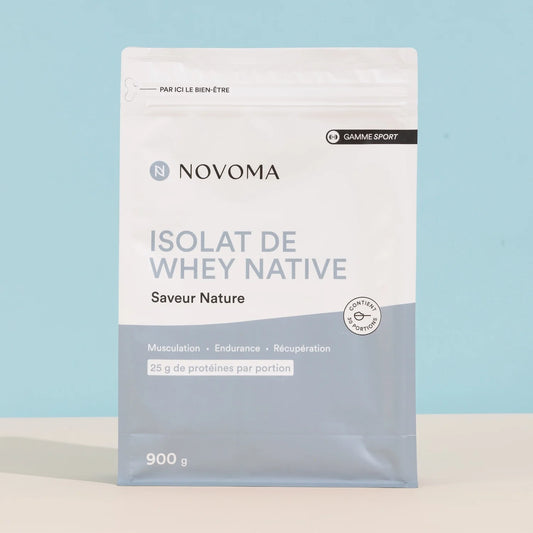
And after your workout, remember to feed your muscles with a quality protein, like native whey isolate , which calms hunger and protects your muscles. Find out more 👇
We recommend you

Native Whey Isolate
Formula enriched with digestive enzymes for easier digestion.
- ✅ Undenatured native protein
- ✅ Milk from French pasture cows
- ✅ High in protein and BCAAs
- ✅ Compliant with anti-doping standards
Beware of excessively large deficits
Too severe a calorie deficit is often counterproductive. It leads to fatigue, muscle loss, and a slowed metabolism, making long-term weight loss difficult. It can also cause deficits, frustration, and cravings, leading to snacking. The ideal is to calculate a moderate calorie deficit that fits your lifestyle, stick to it, and be patient.
The winning approach: calorie deficit + dietary rebalancing
Two levers that go hand in hand
Calorie deficit and dietary rebalancing are complementary: one affects energy intake, the other the quality of the food consumed. The idea isn't to eliminate foods or live in a restrictive way, but to adjust quantities while improving the quality of what we put on our plates. The result? Fewer calories, more nutrients, greater satiety, and above all, less frustration. A winning strategy for losing weight smoothly.
The difference between a real method and yet another diet
As you can see, a slight calorie deficit combined with a balanced diet is THE solution for gradual, sustainable, and frustration-free weight loss. Unlike traditional diets, which are often restrictive and temporary, this approach is a lasting part of your lifestyle. It promotes a better relationship with food, avoids deficiencies, and prevents the yo-yo effect. ✨
It's slower, yes, but much more stable. You preserve your muscle mass, maintain a good metabolism, and above all, you create habits that last over time.
What exactly is dietary rebalancing?
It's about eating everything, in the right proportions, without excess... and without prohibitions. No more strict rules and guilt over a square of chocolate! This approach allows you to lose weight without frustration, while maintaining the pleasure of eating and an active social life. The idea is to make the right choices: because not all calories are equal. 200 kcal of vegetables has nothing to do with 200 kcal of cookies. What matters is the nutritional quality of the food , its ability to nourish the body and provide lasting satisfaction.
Rebalancing is a flexible, personalized method that adapts to your tastes, your lifestyle, and your needs. In short, it's nutritional common sense, long-term. 🧡
Staying motivated (without becoming obsessed with numbers)
Calculating your calorie deficit is a good starting point for becoming aware of your habits and spotting excesses. But be careful not to turn every bite into an equation! The most important thing? Learn to listen to your body: eat when you're hungry, stop when you're full, and be kind to yourself.
And if your stomach is giving you grief during the change in diet, a little natural help never hurts: Novoma probiotics are there to gently take care of your microbiota.
In summary: calculating your calorie deficit is laying the foundation for lasting change for weight loss.
Losing weight sustainably doesn't mean deprivation, frustration, or crazy diets. The real secret is creating a slight calorie deficit , combined with a quality diet, daily exercise, and a little patience. There's no need to change everything overnight: every little step counts.