
















Why take a joint food supplement?
Joints are constantly under strain: during physical activity, repetitive movements at work, or simply over the years. Over time, the natural production of collagen and hyaluronic acid gradually decreases, which can affect daily joint comfort.
Preserving joint health becomes a real challenge. This is where a joint food supplement makes complete sense. It helps cover the intake of essential nutrients for joint and bone tissues:
- Vitamin C contributes to the normal formation of collagen to ensure the normal function of bones and cartilage (1).
- Vitamin D contributes to the maintenance of normal bones and normal muscle function (2).
- Manganese contributes to the maintenance of normal bones and connective tissues (3).
- Copper contributes to the maintenance of normal connective tissues.
These ingredients form the nutritional backbone of any serious joint formula.
Which active ingredients should you choose in a joint food supplement?
Joint food supplements combine several families of active ingredients with complementary characteristics.
Glucosamine and Phytodroïtin
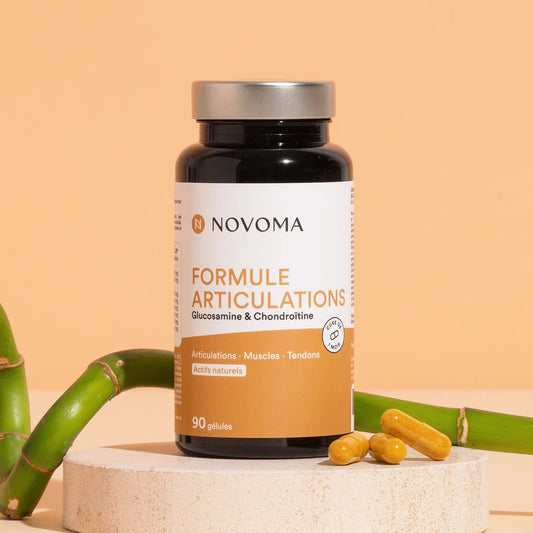
Glucosamine and chondroitin are compounds naturally present in cartilage, but their production gradually decreases with age. Clinical studies are looking into their role in joint comfort (4), and these two ingredients are commonly combined in joint food supplements. Our complete joint formula brings together 500 mg of glucosamine sulfate and 400 mg of Phytodroïtin™, a plant-based alternative to chondroitin.
Marine collagen and hyaluronic acid
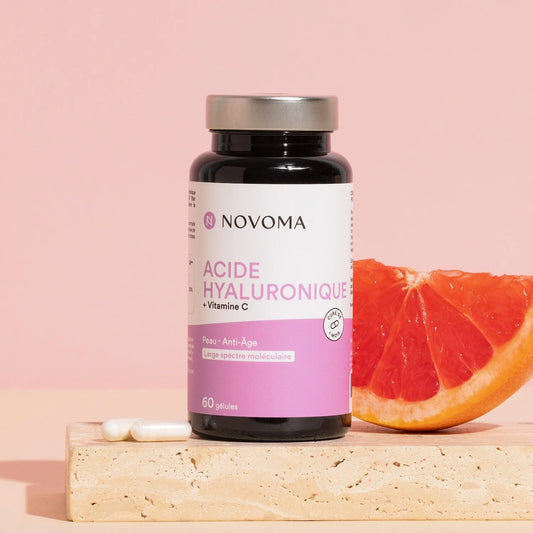
Collagen is the most abundant protein in cartilage and connective tissues, while hyaluronic acid is naturally present in the synovial fluid that surrounds and protects the joints. These two compounds, whose concentration decreases with age, provide substances that make up joint tissues.
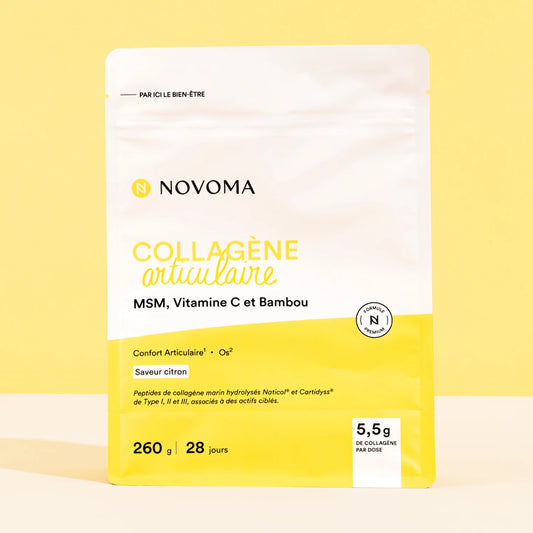
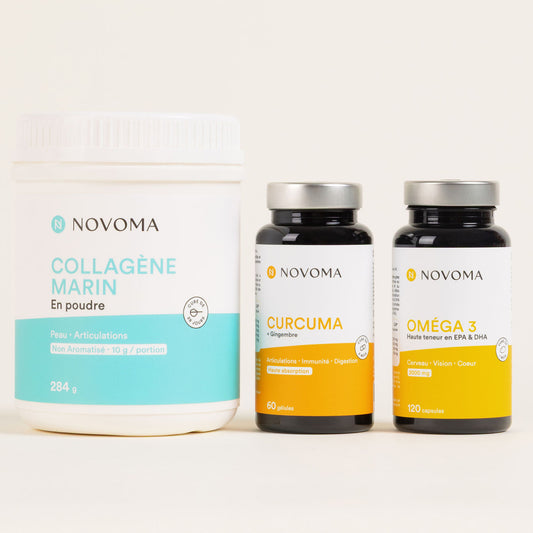
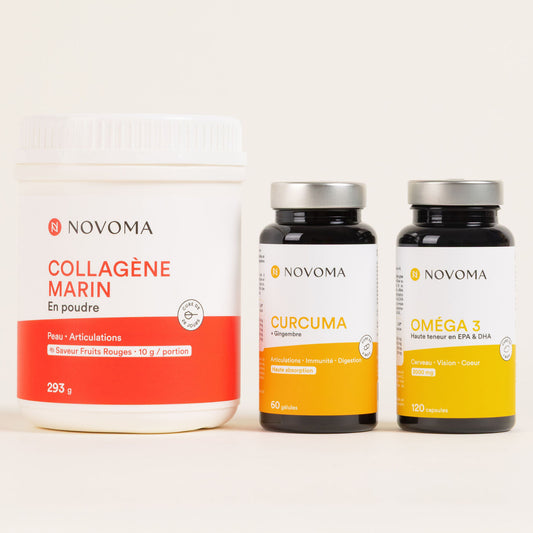
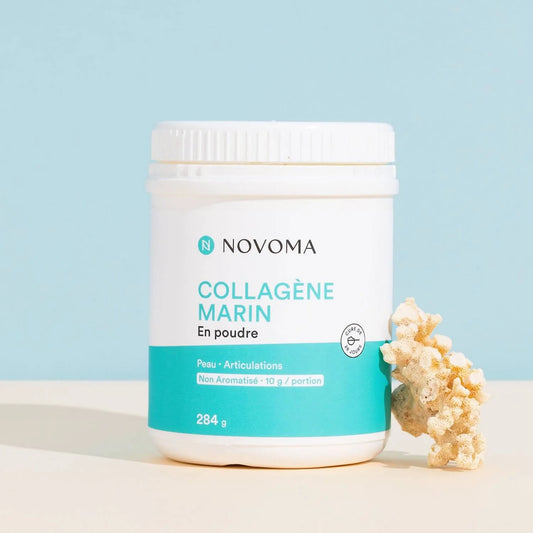
Vitamin C completes the formula by contributing to the normal formation of collagen to ensure the normal function of bones and cartilage (1). Our Naticol® marine collagen powder is one of the flagship ingredients in the collection.
Turmeric and traditionally used plants
Turmeric, devil's claw, and boswellia are plants traditionally used for joint comfort in various traditions, particularly Ayurvedic and African ones. They are often included in joint formulas to complement the intake of vitamins, minerals, and other targeted compounds. However, ANSES highlights potential interactions between turmeric and anticoagulant treatments: medical advice is required before starting any supplementation if you are currently undergoing treatment.
MSM (methylsulfonylmethane)
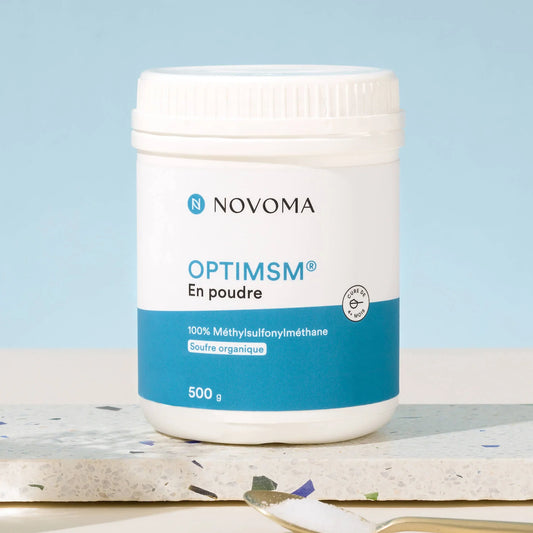
MSM is a sulfur compound naturally present in the body. It is involved in the composition of connective tissues, including cartilage and tendons. Our OptiMSM® MSM powder is a patented form of American origin, one of the most studied in the scientific literature on this compound.
How to preserve joint health on a daily basis?
Supplementation is part of a holistic approach. To preserve joint health on a daily basis, physical activity and diet remain the two primary levers. Certain nutrients such as vitamin C, vitamin D, manganese, and copper can then complement this foundation, in support of an already consistent routine.
The importance of appropriate physical activity
Movement maintains the joints and helps preserve their flexibility on a daily basis. Low-impact activities such as walking, cycling, and swimming are particularly beneficial, as they engage the body without excessive impact. At the same time, good muscle tone helps better support the joints. For athletes, progressive warm-up and careful recovery help limit excessive strain.
Adopting a diet that supports joint comfort
Some foods contribute to micronutrient intakes useful for joint tissues:
- Oily fish (salmon, mackerel, sardine) and nuts provide omega-3. Oily fish also provide vitamin D, as does egg yolk.
- Citrus fruits and kiwi provide vitamin C, which contributes to the normal formation of collagen to ensure the normal function of bones and cartilage.
- Whole grains and dried fruits are rich in manganese.
- Offal and seafood provide copper and zinc.
- Good daily hydration completes this approach.
Food supplements do not replace a varied and balanced diet or a healthy lifestyle (5). They do not replace medical advice: in case of persistent joint discomfort or unusual symptoms, consult a healthcare professional. If you are undergoing medical treatment, particularly anticoagulants, ask your doctor or pharmacist before any supplementation, as some plants (turmeric, devil's claw) may interact with these treatments.
Scientific references
- EFSA Panel on Dietetic Products, Nutrition and Allergies. Scientific Opinion on the substantiation of health claims related to vitamin C and the formation of collagen for the normal function of cartilage. EFSA Journal. 2009. https://www.efsa.europa.eu/en/efsajournal/pub/2009
- EFSA Panel on Dietetic Products, Nutrition and Allergies. Scientific Opinion on the substantiation of health claims related to vitamin D and maintenance of normal bones. EFSA Journal. 2009. https://www.efsa.europa.eu/en/efsajournal/pub/1227
- EFSA Panel on Dietetic Products, Nutrition and Allergies. Scientific Opinion on the substantiation of health claims related to manganese and maintenance of normal connective tissue. EFSA Journal. 2010. https://www.efsa.europa.eu/en/efsajournal/pub/1808
- Towheed T.E. et al. Glucosamine therapy for treating osteoarthritis. Cochrane Database of Systematic Reviews. 2005. https://www.cochranelibrary.com/cdsr/doi/10.1002/14651858.CD002946.pub2/full
- ANSES. Food supplements: the need for informed consumption. https://www.anses.fr/fr/content/les-complements-alimentaires-necessite-dune-consommation-eclairee
The information on this page does not replace the advice of a healthcare professional. Food supplements do not substitute for a varied and balanced diet or a healthy lifestyle. In case of doubt, consult a healthcare professional.
Your questions about joint supplements
Why take joint supplements?
What are the main causes of joint discomfort?
What are the main ingredients to look for in joint supplements?
How does hyaluronic acid promote joint lubrication?
Why is collagen essential for joint comfort?
How to choose your food supplement for joints?
What is the best dietary supplement for joints?
Can collagen and glucosamine be combined?
Which dietary supplement is most effective against joint pain?
How to promote cartilage regeneration naturally?
Les articles les plus lus


Si vous ne trouvez pas les informations que vous cherchez, n’hésitez pas à consulter notre FAQ ou à nous écrire sur le chat 24/24. Vous pouvez aussi nous contacter :


