







What is vitamin C?
Vitamin C, or ascorbic acid, is a water-soluble vitamin that the human body cannot produce. Unlike most mammals, we have lost the enzyme that synthesizes it.
It is also not stored, and what the body doesn't use is excreted in urine. Therefore, it must be supplied daily through diet, mainly from fresh fruits and vegetables, or through supplementation when nutritional intake is insufficient.
What is vitamin C used for?
Vitamin C is involved in several essential bodily functions, recognized by European regulations (1)(2).
- ✓ Energy and fatigue: it helps reduce fatigue and contributes to normal energy metabolism (3).
- ✓ Natural defenses: it contributes to the normal functioning of the immune system (3).
- ✓ Cell protection: it contributes to the protection of cells from oxidative stress.
- ✓ Collagen: it contributes to normal collagen formation for the normal function of skin, bones, cartilage, gums, teeth, and blood vessels.
- ✓ Nervous system: it contributes to the normal functioning of the nervous system and to normal psychological functions.
- ✓ Iron absorption: it increases iron absorption.
These different roles explain the many benefits of vitamin C and its importance for the proper functioning of the body.
When should you take a vitamin C supplement?
Our diet doesn't always contain enough raw fruits or vegetables to meet our vitamin C needs, while certain situations increase our requirements:
Periods of temporary fatigue or loss of vitality. Vitamin C helps reduce fatigue, and these are often times when diets become simpler and poorer in fresh fruit.
Seasonal changes. Autumn and winter reduce the amount of raw food on our plates, just when the immune system is more stressed.
Periods of nervous tension. Vitamin C contributes to normal psychological functions, which is why it is part of our selection of anti-stress supplements.
In these situations, a vitamin C supplement can be beneficial to complement nutritional intake, but it never replaces a varied and balanced diet or a healthy lifestyle.
Vitamin C in capsules, powder, or liquid?
Our four galenic forms of vitamin C differ on three points: ease of use, price per gram, and digestive comfort.
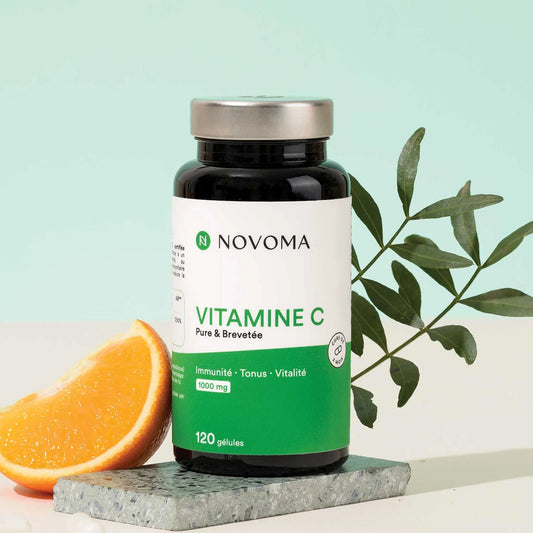
Capsules remain the simplest format. Our Quali®-C Vitamin C provides 1,000 mg of pure L-ascorbic acid in 2 capsules, with no acidic taste and no need to handle a scoop. This is the reference form in the range.
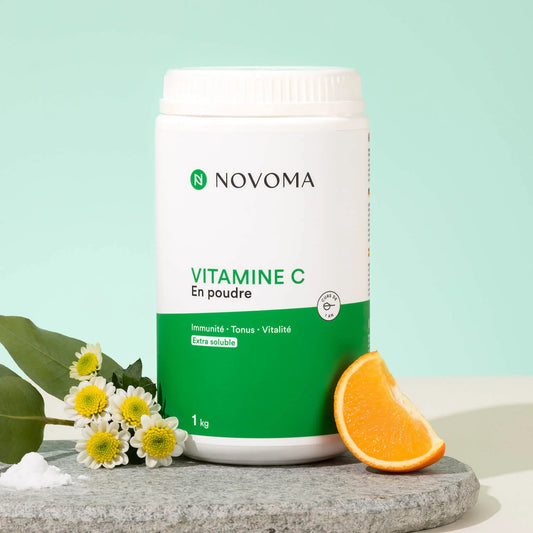
Powder is the most economical. Sold in 500g or 1kg jars, our Vitamin C powder is much cheaper for a long-term course. It is easily dosed with the included spoon and dissolves quickly in a glass of water or fruit juice.
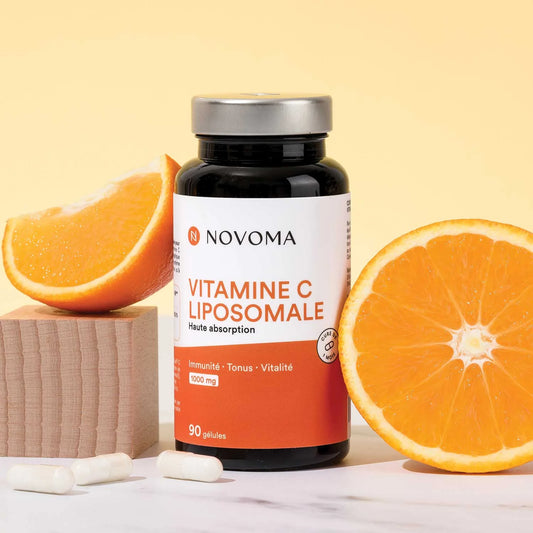
The liposomal form promotes better assimilation. In our liposomal Vitamin C in capsules, vitamin C is encapsulated in sunflower phospholipids. This encapsulation protects it from gastric acidity and improves its digestive tolerance. The daily dose, three capsules, provides 1,000 mg of vitamin C.
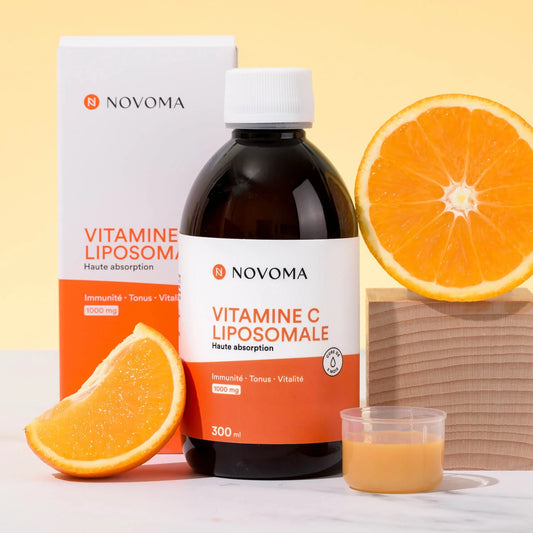
Finally, the liquid form allows for precise dose adjustment down to the milliliter. It contains sodium, so caution should be exercised in cases of high blood pressure or heart problems.
Natural Vitamin C: Acerola
Acerola is a small cherry from South America, one of the most concentrated plant sources of vitamin C. Our Organic Acerola 1000 is formulated from a juice standardized to 17% vitamin C from organic farming: it is our 100% natural vitamin C supplement.
Its natural origin does not, however, make it a better vitamin C. The L-ascorbic acid in our other products is also of plant origin, obtained from corn.
The body does not differentiate because the molecule is identical. In other words, both forms are strictly equivalent in effectiveness.
The choice is therefore a matter of personal preference. Acerola has the advantage of a chewable format, appreciated for its ease of daily use.
One caveat to be aware of: acerola is not recommended for gout, as it increases uric acid levels.
Why choose Novoma vitamin C?
Our vitamin C carries the Quali®-C label, produced by DSM in Scotland. It is recognized for its pharmaceutical quality and traceability, from corn to the capsule. It is the same active ingredient in our capsule, liposomal, and liquid forms.
Our commitment to quality guides every aspect of our vitamin C supplements: bioactive forms, French manufacturing, 100% recycled and recyclable R-PET bottles, and available analysis certificates for each batch.
Transparency on origin and controls are part of our commitments, as is the absence of controversial additives in our formulas.
Scientific References
1. Commission Regulation (EU) No 432/2012 of 16 May 2012 establishing a list of permitted health claims made on foods. https://eur-lex.europa.eu/legal-content/FR/TXT/HTML/?uri=CELEX:32012R0432
2. EFSA NDA Panel (2009). Health claims related to vitamin C: protection of cells from oxidative stress (ID 129, 138, 143, 148), collagen formation (ID 130, 131, 136, 137, 149), nervous system (ID 133), immune system (ID 134), iron absorption (ID 132, 147), energy metabolism (ID 135). EFSA Journal 2009;7(9):1226. https://efsa.onlinelibrary.wiley.com/doi/10.2903/j.efsa.2009.1226
3. EFSA NDA Panel (2010). Health claims related to vitamin C: reduction of fatigue (ID 139, 2622), normal psychological functions (ID 140), energy metabolism (ID 2334, 3196), normal functioning of the immune system (ID 4321). EFSA Journal 2010;8(10):1815. https://efsa.onlinelibrary.wiley.com/doi/10.2903/j.efsa.2010.1815
The information on this page is provided for informational purposes only and does not constitute medical advice. In case of illness, ongoing treatment, kidney stones, or pregnancy, consult a healthcare professional before any supplementation. Food supplements do not replace a varied and balanced diet or a healthy lifestyle. Do not exceed the recommended daily dose.
Your questions about Vitamin C
What is the best vitamin C supplement?
Which vitamin C should I take for skin?
What is the difference between natural vitamin C and synthetic vitamin C?
What are the synergies of vitamin C with other active ingredients?
Vitamin C and Iron: Why Combine Them?
Is it good to take vitamin C every day?
What shouldn't be mixed with vitamin C?
How long should I take vitamin C?
Does vitamin C supplementation work quickly?
When is the best time of day to take vitamin C?
Can a person with diabetes take vitamin C?
What are the contraindications for vitamin C supplements?
Can you take vitamin C during pregnancy?
Is vitamin C suitable for children and vegetarians?
Les articles les plus lus


Si vous ne trouvez pas les informations que vous cherchez, n’hésitez pas à consulter notre FAQ ou à nous écrire sur le chat 24/24. Vous pouvez aussi nous contacter :


