Why take a health supplement?
Modern diets, even balanced ones, do not always meet nutritional needs. The progressive depletion of agricultural soils, demanding lifestyles, repetitive food choices, and certain cooking methods can reduce the intake of essential micronutrients. This is particularly true for vitamin D, magnesium, iron, and omega-3s, whose levels are insufficient in certain segments of the French population (1).
A health supplement helps to complement these intakes or cover greater needs during certain periods of life. It is not a substitute for a varied and balanced diet.
How to choose a quality health supplement?
Choosing a good health supplement starts with the chemical form of the active ingredient. Two products containing the same ingredient can have very different efficacies depending on the form used.
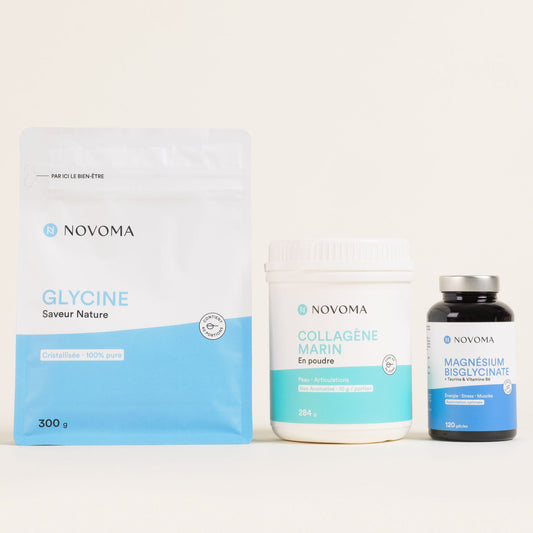
Prioritize the most bioavailable forms: magnesium in bisglycinate form is better absorbed than oxide, vitamin B12 as methylcobalamin is directly usable by the body, and active vitamin B6 (P-5-P) is better assimilated than classic pyridoxine.
Next, choose a transparent composition: independent analyses, clearly indicated dosages, without proprietary complexes or controversial additives.
Finally, opt for French or European manufacturing, which guarantees strict sanitary controls and traceability throughout the production chain.
At Novoma, this commitment to quality is reflected in our commitments and our formulation choices: bioavailable and bioactive forms, clean label, Made in France…
Different forms of supplementation
The galenic form can impact assimilation and ease of intake:
Capsules are the most versatile form: high concentration, no sugary excipients, easy dosage.
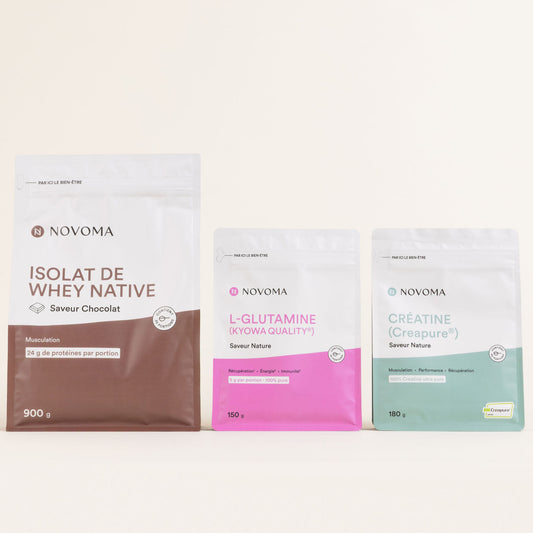
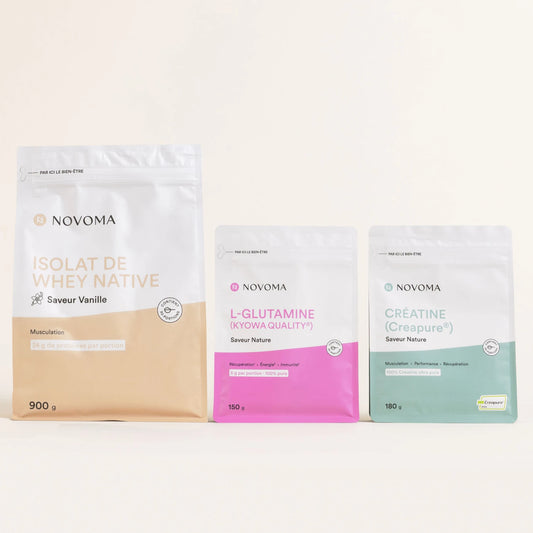
Powder allows for larger doses. It is suitable for active ingredients requiring high doses, such as vitamin C or creatine.
The liposomal form encapsulates active ingredients in lipid vesicles to improve their passage through the intestinal wall, ideal for liposomal vitamin C, for example.
Finally, liquids are suitable for people who have difficulty swallowing capsules or who seek rapid absorption.
Choose the form that is best assimilated, but also the most comfortable for you: this often determines the regularity of taking your health supplements.
Precautions and proper use of health supplements
When used correctly and at recommended doses, health supplements are not dangerous for health. However, prolonged overdose, the accumulation of several sources of the same active ingredient, or interactions with medical treatment can pose a risk.
ANSES recommends informed consumption (2): respect the indicated doses and consult a healthcare professional in case of pregnancy, breastfeeding, or ongoing treatment. A health supplement is not a medicine and does not replace a varied and balanced diet.
Discover our health ranges
Our selection of health supplements is organized by objective to help you quickly find the formula adapted to your needs:
- ✓ Immunity: support your natural defenses daily and during periods of vulnerability.
- ✓ Fatigue and energy: reduce fatigue and regain your physical and mental vitality.
- ✓ Sleep: promote peaceful falling asleep and quality sleep.
- ✓ Nervous balance: support your nervous system in the face of daily stresses.
- ✓ Digestion: contribute to your intestinal comfort and the balance of your microbiota.
- ✓ Joints: maintain joint flexibility and comfort in movement.
- ✓ Vitamins and minerals: supplement your intake of essential micronutrients.
Looking for supplements for other goals? Discover our Beauty, Sport, and Pregnancy ranges.
Scientific references
References covering insufficient intake or status of certain nutrients in the French population: vitamin D, iron, vitamin B9, magnesium, and omega 3:
- ANSES. Dietary supplements, the need for informed consumption. https://www.anses.fr/fr/content/les-complements-alimentaires-necessite-dune-consommation-eclairee
- ANSES. All about the nutrivigilance system. https://www.anses.fr/fr/content/tout-savoir-sur-le-dispositif-de-nutrivigilance