









Why take an eye health food supplement?
Our eyes are put to the test all day long: screens, reading, driving, artificial light… As we age, our eyes sometimes handle these demands less well. At the same time, our diet does not always cover all the nutrients useful for our eyes, especially when meals lack fatty fish, colorful vegetables, or simply variety.
An eye health food supplement helps you supplement the nutrient intake that contributes to the proper functioning of your vision. Our selection brings together several families of active ingredients: zinc, vitamins A and B2, omega-3 fatty acids, and antioxidant vitamins.
These supplements accompany a varied and balanced diet, but do not replace it. They fit into an overall approach, alongside good lifestyle habits and appropriate actions to preserve your daily visual comfort.
What are the essential nutrients for eye health?
Several nutrients play a well-established role in eye function. Here are the main families and the Novoma products that provide them.
Zinc and vitamins A and B2
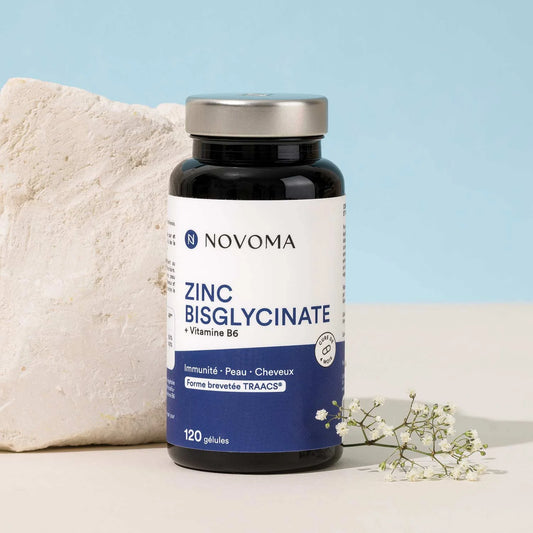
Zinc, vitamin A, and vitamin B2 contribute to the maintenance of normal vision (1)(2)(3). Zinc also contributes to the protection of cells from oxidative stress (3). Our Zinc Bisglycinate provides 15 mg of TRAACS® zinc per capsule, while our Multitamins combine zinc, vitamin A, and vitamin B2 in a single formula.
Omega-3 fatty acids (DHA)
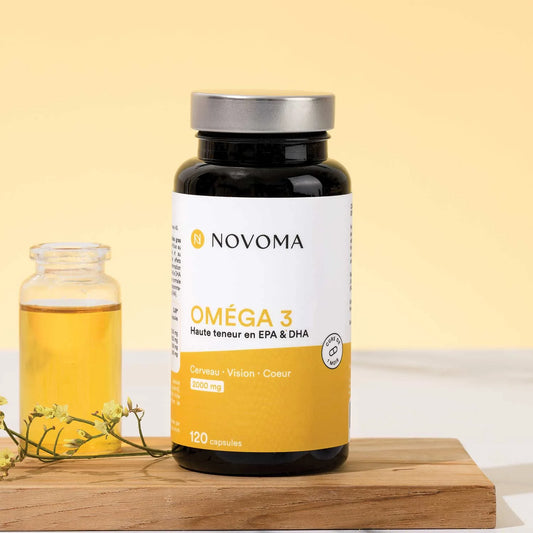
The link between omega-3s and eye well-being is well documented today. DHA, one of the omega-3 fatty acids, contributes to the maintenance of normal vision with a daily intake of 250 mg (1)(4). It is also a natural constituent of the retina. Our Omega-3 Epax provides 600 mg of DHA per dose, well above the efficacy threshold recognized by the EFSA.
Antioxidant vitamins C, E, and selenium
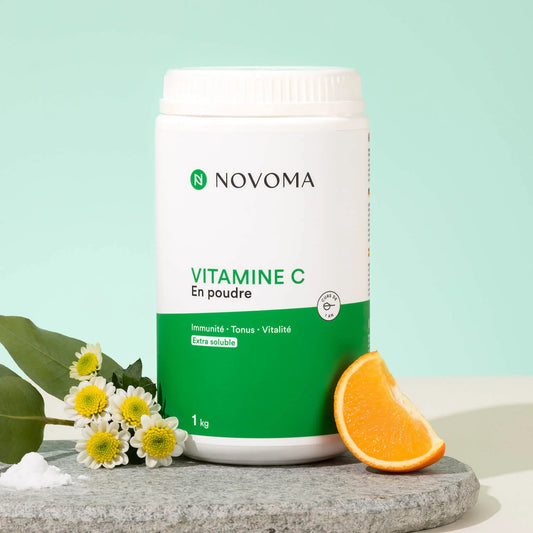
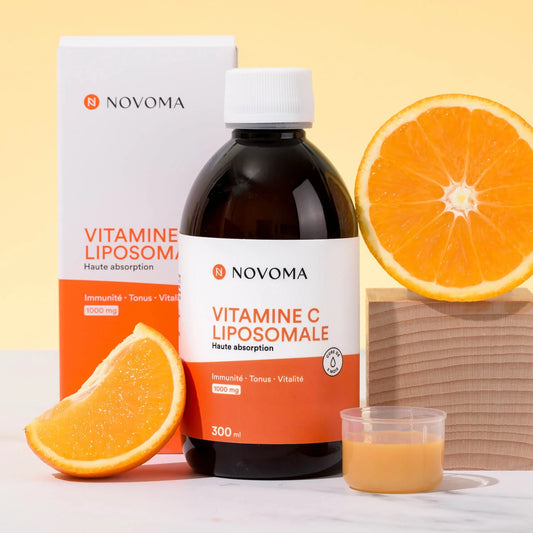
Vitamin C, vitamin E, and selenium contribute to the protection of cells from oxidative stress (1). These three active ingredients are present in our Multitamins, alongside zinc and vitamin A.
Carotenoids: lutein, zeaxanthin, and blueberry
Lutein and zeaxanthin are pigments from the carotenoid family, naturally concentrated in the macula, the central area of the retina (5). As for blueberry extract, it is traditionally present in formulas dedicated to visual comfort. These three ingredients are combined in our Multitamins.
Choosing the right eye health food supplement
To choose an effective eye health food supplement, focus on these criteria:
- ✓ The form of the active ingredients: it must be well absorbed by the body. Zinc bisglycinate TRAACS®, for example, is a chelated form recognized for its good absorption. For omega-3s, the triglyceride form, the natural structure of these fatty acids in fish, is better recognized and absorbed by the body.
- ✓ Dosage: it must be sufficient to reach efficacy thresholds. For example, to contribute to maintaining normal vision, DHA intake must reach at least 250 mg per day.
- ✓ Purity of ingredients: it can be verified using precise criteria. For fish oil, for example, a low TOTOX index indicates better freshness and good stability.
- ✓ Formula transparency: it relies on a clear composition, well-identified active ingredients, and precise dosages. French manufacturing facilitates traceability and quality control.
How to avoid eye strain on a daily basis?
Tired eyes are often linked to screen time. A few simple habits can help limit visual fatigue.
Start by taking regular breaks away from screens. Apply the 20-20-20 rule: every 20 minutes, look for 20 seconds at a point about 6 meters (20 feet) away. This exercise helps the eye muscles relax.
Adjust your workstation lighting: it should be neither too dim nor glaring. Also, remember to blink often in front of your screen to keep your eyes hydrated.
Outdoors, wear sunglasses that filter UV rays to protect your eyes. In the evening, limit exposure to blue light, especially before bedtime.
These simple visual hygiene habits are the first steps to adopt when your eyes are overworked.
When should you consult a healthcare professional?
Our food supplements can contribute to visual comfort, but they never replace medical advice. Consult a healthcare professional if you notice a persistent decline or disorder in vision, eye pain, or unusual sensitivity to light.
People with a history of diabetes or high blood pressure should pay special attention to their eyes. In these situations, an ophthalmologist can establish a diagnosis and guide you accordingly.
Why choose Novoma supplements for vision?
At Novoma, our vision supplements are formulated using rigorously selected ingredients and bioactive or branded forms, such as TRAACS® zinc bisglycinate, DHA from EPAX® oil, or beta-carotene from Dunaliella. We prioritize recognized active ingredients, effective dosages, and a transparent composition. All our formulas are made in France, without controversial additives, adhering to strict quality and traceability standards. This rigor applies to our entire range and has been part of our commitments from the beginning.
A word from the expert
[INSERT HERE: Expert word — 50-80 words. Verbatim 1-2 sentences in the first person (identified Novoma R&D member, with author page link). To be validated with the Scientific Committee author before publication. No therapeutic terms; concrete regimen recommendation (e.g., Multitamins + Omega-3 routine).]
Scientific references
1. European Commission (2012). Commission Regulation (EU) No 432/2012 establishing a list of permitted health claims made on foods. Official Journal of the European Union, L 136. EUR-Lex CELEX:32012R0432.
2. EFSA NDA Panel (2010). Scientific Opinion on the substantiation of health claims related to vitamin A and maintenance of normal vision. EFSA Journal 2010;8(10):1754.
3. EFSA NDA Panel (2009). Scientific Opinion on the substantiation of health claims related to zinc, including maintenance of normal vision (ID 361) and protection of cells against oxidative stress (ID 294). EFSA Journal 2009;7(9):1229.
4. EFSA NDA Panel (2010). Scientific Opinion on DHA and maintenance of normal vision. EFSA Journal 2010;8(10):1734.
5. Chew EY et al. (2013). Lutein + zeaxanthin and omega-3 fatty acids for age-related macular degeneration: the Age-Related Eye Disease Study 2 (AREDS2) randomized clinical trial. JAMA, 309(19):2005-2015. PubMed 23644932.
The information on this page is provided for informational purposes only and does not replace medical advice. In case of vision decline, eye pain, persistent discomfort, or known eye pathology, consult an ophthalmologist. Food supplements are not a substitute for a varied and balanced diet or a healthy lifestyle.
Your questions about Vision & Eye Supplements
What's the best dietary supplement for eyes?
What are eye supplements used for?
What is the best dietary supplement for dry eyes?
Which eye supplements after surgery?
What's a natural alternative for tired eyes?
What's the best eye exercise?
What are the contraindications for vision supplements?
Les articles les plus lus


Si vous ne trouvez pas les informations que vous cherchez, n’hésitez pas à consulter notre FAQ ou à nous écrire sur le chat 24/24. Vous pouvez aussi nous contacter :


